
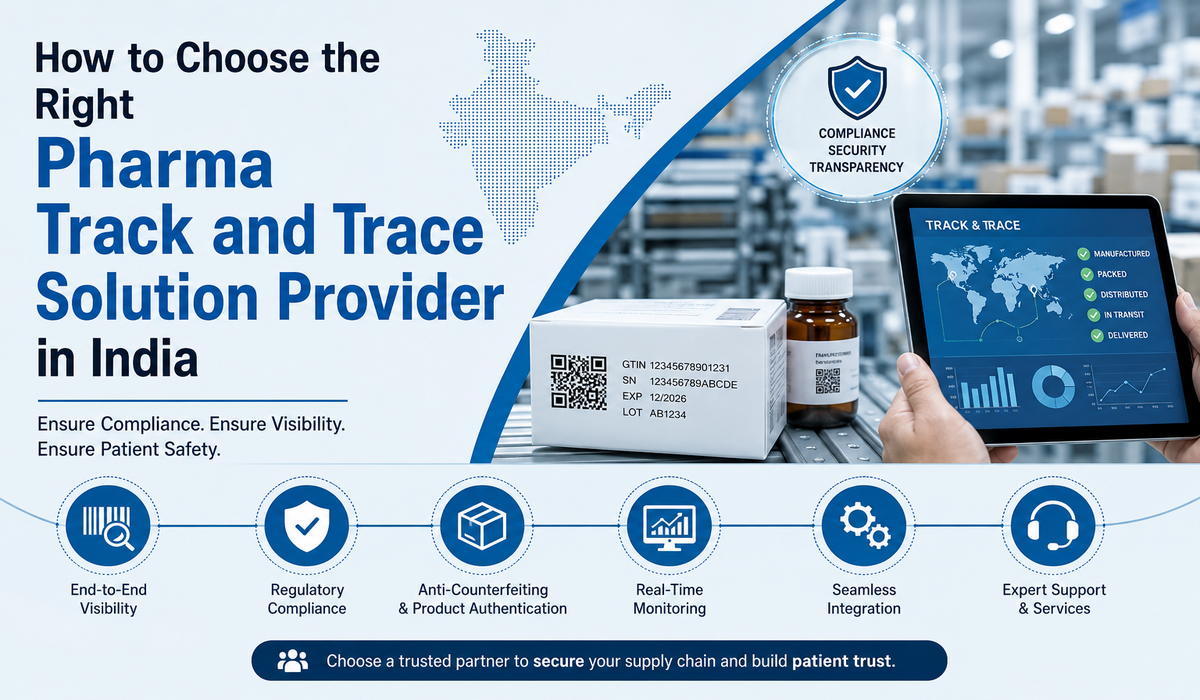
The pharmaceutical industry in India plays a critical role in supplying medicines to domestic and international markets. As pharmaceutical supply chains become increasingly complex, ensuring product authenticity, regulatory compliance, and end-to-end visibility has become more important than ever. Counterfeit medicines, product diversion, and compliance challenges continue to pose significant risks to manufacturers, distributors, healthcare providers, and patients.
To address these concerns, pharmaceutical companies are rapidly adopting track and trace technologies that provide real-time visibility across the supply chain. However, selecting the Right Pharma Track and Trace Solution Provider is a strategic decision that can significantly impact operational efficiency, regulatory compliance, and business growth.
With numerous solution providers offering different technologies and capabilities, pharmaceutical companies must carefully evaluate their options before making an investment. Understanding the key factors that define a reliable provider can help businesses implement a future-ready track and trace system that delivers long-term value.
Understanding Pharma Track and Trace Solutions
Pharma track and trace solutions are technology-driven systems designed to monitor pharmaceutical products throughout their lifecycle. These solutions enable manufacturers to assign unique identifiers to products and track their movement from production facilities to distribution centers, pharmacies, hospitals, and end consumers.
A comprehensive track and trace system provides complete visibility into product journeys while helping organizations verify authenticity, maintain compliance, and quickly identify issues within the supply chain. The technology typically incorporates serialization, barcode management, aggregation, data management, reporting, and regulatory compliance features.
As regulatory requirements continue to evolve globally, pharmaceutical organizations increasingly depend on a trusted Pharma Track and Trace Solution Provider to implement scalable systems that can adapt to changing compliance standards.
Why Choosing the Right Solution Provider Matters
Implementing a track and trace system is not simply a technology upgrade. It is a strategic transformation that affects manufacturing operations, quality assurance, logistics, warehouse management, compliance processes, and customer trust.
A reliable solution provider can streamline implementation, reduce operational disruptions, and ensure seamless integration with existing business systems. Conversely, choosing an inexperienced provider can lead to compliance failures, costly delays, inefficient workflows, and increased operational risks.
Since pharmaceutical supply chains operate in highly regulated environments, the expertise and capabilities of the chosen provider become critical to the success of the project.
Evaluate Industry Experience and Domain Expertise
One of the first considerations when selecting a Pharma Track and Trace Solution Provider is industry experience. Pharmaceutical operations involve unique challenges that differ significantly from those of other industries. Regulatory requirements, product serialization standards, validation processes, and quality management protocols require specialized knowledge.
An experienced provider understands the complexities of pharmaceutical manufacturing and distribution. They can recommend best practices, anticipate implementation challenges, and develop solutions tailored to industry-specific requirements.
Organizations should assess the provider’s track record, case studies, implementation history, and experience working with pharmaceutical manufacturers of similar size and operational complexity.
Assess Regulatory Compliance Capabilities
Regulatory compliance is one of the most important aspects of any pharmaceutical track and trace implementation. Pharmaceutical companies must comply with various national and international regulations governing serialization, product authentication, and supply chain transparency.
A qualified Pharma Track and Trace Solution Provider should have extensive knowledge of regulatory frameworks and be capable of supporting compliance requirements across multiple markets. The solution should provide features that simplify reporting, record management, audit readiness, and data integrity.
Choosing a provider with strong compliance expertise helps pharmaceutical organizations minimize risks associated with regulatory violations while maintaining uninterrupted business operations.
Examine Technology Architecture and Scalability
Technology requirements often evolve as pharmaceutical businesses expand their operations. A solution that meets current needs may become insufficient as production volumes increase or regulatory requirements change.
For this reason, businesses should evaluate the scalability of the proposed track and trace platform. A future-ready system should be capable of handling increased transaction volumes, multiple manufacturing facilities, expanding product portfolios, and global supply chain operations.
The ideal Pharma Track and Trace Solution Provider should offer flexible and scalable architecture that supports long-term growth without requiring extensive system redesigns or costly upgrades.
Integration with Existing Enterprise Systems
Most pharmaceutical companies already operate various software platforms, including ERP systems, warehouse management systems, manufacturing execution systems, and quality management applications.
A successful track and trace implementation requires seamless communication between these systems. Poor integration can result in data silos, duplicate processes, and operational inefficiencies.
When evaluating providers, organizations should determine whether the solution can integrate smoothly with existing business applications. An experienced Pharma Track and Trace Solution Provider should offer robust integration capabilities that ensure accurate and synchronized data flow across the enterprise.
Data Security and System Reliability
Pharmaceutical companies manage highly sensitive business and product information. Protecting this data is essential for maintaining regulatory compliance and safeguarding business operations.
A reliable provider should implement strong cybersecurity measures, including encryption, secure access controls, regular security updates, and backup mechanisms. The platform should also provide high availability and minimal downtime to support uninterrupted operations.
Evaluating security certifications, data protection policies, and disaster recovery capabilities can help organizations identify providers that prioritize information security and operational reliability.
Real-Time Visibility and Reporting Features
Modern pharmaceutical supply chains generate massive amounts of data. To extract meaningful insights, companies require advanced monitoring and reporting capabilities.
The right Pharma Track and Trace Solution Provider should offer dashboards, analytics tools, and real-time reporting features that enable businesses to monitor product movement, identify bottlenecks, and detect potential issues quickly.
Comprehensive reporting capabilities not only improve operational visibility but also support compliance audits, quality investigations, and supply chain optimization initiatives.
Implementation Support and Training Services
Even the most advanced technology can fail to deliver value if users are unable to utilize it effectively. Implementation support and employee training are therefore critical factors when selecting a solution provider.
A dependable provider should offer structured implementation methodologies, project management expertise, technical support, and comprehensive training programs. Effective onboarding ensures that employees understand system functionalities and can confidently manage day-to-day operations.
Organizations should evaluate the provider’s post-implementation support capabilities, including maintenance services, software updates, and technical assistance.
Customization and Future Readiness
Every pharmaceutical organization operates differently. Manufacturing processes, compliance requirements, distribution models, and operational workflows often vary across businesses.
A competent Pharma Track and Trace Solution Provider should offer customizable solutions that align with specific business requirements while maintaining regulatory compliance. Customization flexibility allows organizations to optimize workflows without compromising operational efficiency.
Additionally, the provider should demonstrate a commitment to innovation by incorporating emerging technologies such as cloud computing, artificial intelligence, IoT-enabled tracking, and advanced analytics into their roadmap.
Cost Considerations and Return on Investment
While cost is an important factor, pharmaceutical companies should avoid making decisions based solely on price. The lowest-cost solution may not provide the functionality, scalability, or support necessary for long-term success.
Instead, organizations should evaluate the overall value delivered by the solution. Factors such as compliance assurance, operational efficiency improvements, reduced counterfeit risks, enhanced visibility, and long-term scalability contribute significantly to return on investment.
A reliable Pharma Track and Trace Solution Provider should be transparent about implementation costs, licensing fees, maintenance expenses, and future upgrade requirements.
Questions to Ask Before Finalizing a Provider
Before making a final decision, pharmaceutical companies should conduct a detailed assessment of potential providers. Discussions should focus on implementation timelines, compliance expertise, integration capabilities, support models, scalability, and security measures.
Understanding how the provider has addressed similar challenges for other pharmaceutical organizations can provide valuable insights into their capabilities and reliability. A thorough evaluation process helps organizations identify a provider that aligns with both current requirements and future business objectives.
Conclusion
Selecting the Right Pharma Track and Trace Solution Provider is a critical decision that influences compliance, operational efficiency, product security, and overall supply chain performance. As regulatory expectations continue to increase and pharmaceutical supply chains become more interconnected, businesses need technology partners that offer expertise, scalability, reliability, and innovation.
By carefully evaluating industry experience, compliance capabilities, technology infrastructure, integration support, security standards, and customer service, pharmaceutical organizations can make informed decisions that deliver long-term value. A well-chosen track and trace solution not only helps organizations meet regulatory requirements but also strengthens supply chain visibility, protects brand reputation, and enhances patient safety in an increasingly competitive pharmaceutical landscape.
