

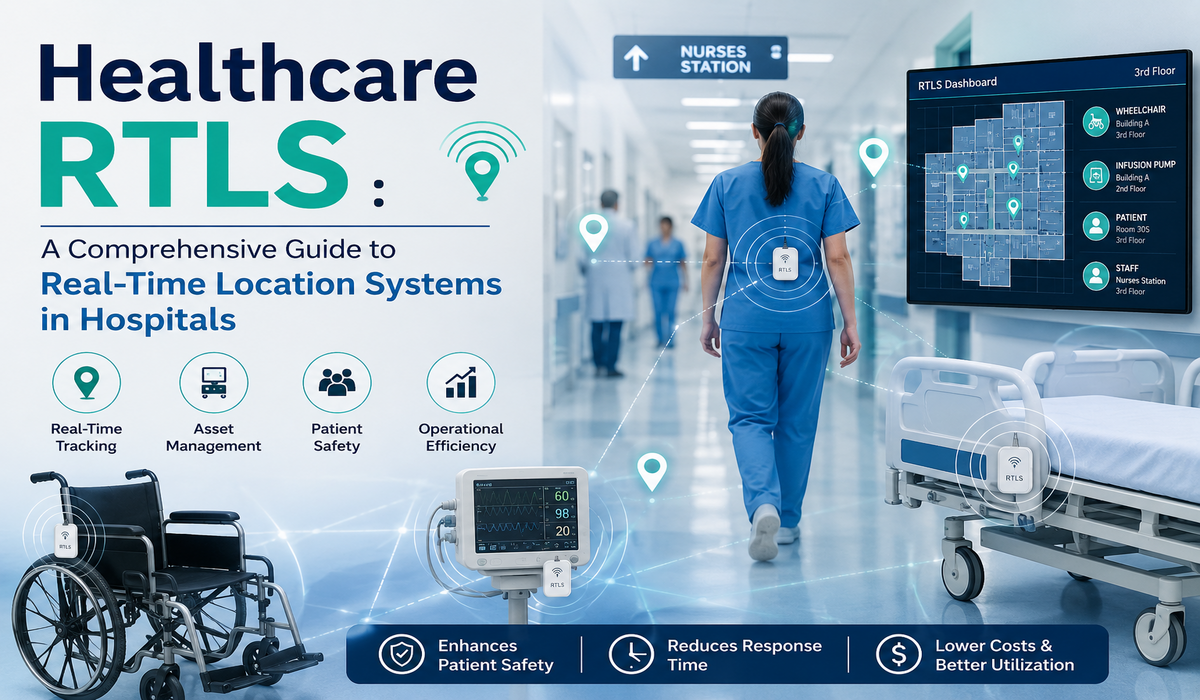
Healthcare organizations are under constant pressure to improve patient care while managing operational efficiency and controlling costs. Hospitals handle thousands of patients, medical devices, staff members, and critical assets every day, making real-time visibility essential for smooth operations. This is where Healthcare RTLS has become a game-changing technology. By providing accurate, real-time tracking of people, equipment, and resources, Healthcare RTLS helps hospitals streamline workflows, reduce delays, enhance patient safety, and make better use of their assets.
As healthcare facilities continue to embrace digital transformation, the demand for intelligent location-tracking solutions is growing rapidly. From locating life-saving medical equipment within seconds to monitoring patient movement and ensuring staff safety, Healthcare RTLS is transforming the way modern hospitals operate.
In this comprehensive guide, we’ll explore what Healthcare RTLS is, how it works, its benefits, key applications, implementation considerations, and why it has become an essential technology for healthcare providers worldwide.
What is Healthcare RTLS?
Healthcare RTLS, or Healthcare Real-Time Location System, is a technology that enables hospitals and healthcare facilities to identify, locate, and monitor medical equipment, patients, healthcare professionals, and other critical assets in real time. Using wireless communication technologies such as RFID, Bluetooth Low Energy (BLE), Wi-Fi, Ultra-Wideband (UWB), GPS, and IoT sensors, RTLS continuously tracks the movement and location of tagged objects throughout a healthcare environment.
Unlike traditional inventory or asset management systems that provide periodic updates, Healthcare RTLS delivers continuous visibility into hospital operations. This real-time information allows administrators, clinicians, and support staff to quickly locate essential resources, improve response times, and optimize overall hospital performance.
As hospitals expand their digital infrastructure, Healthcare RTLS has become a foundational technology for creating smarter, more connected healthcare facilities.
Why Modern Hospitals Need Healthcare RTLS
Hospitals manage thousands of valuable medical assets while delivering time-sensitive patient care. Delays caused by misplaced equipment, overcrowded departments, inefficient workflows, or poor resource utilization can directly impact patient outcomes and operational costs.
Healthcare RTLS addresses these challenges by providing continuous visibility into hospital operations. Instead of manually searching for wheelchairs, infusion pumps, portable ventilators, or diagnostic devices, staff members can instantly locate them using a centralized RTLS platform.
Beyond equipment tracking, Healthcare RTLS enables hospitals to monitor patient flow from admission through discharge. This helps reduce waiting times, improve bed utilization, and ensure patients move efficiently through different departments.
How Healthcare RTLS Works
Healthcare RTLS combines several technologies to provide accurate location tracking throughout a hospital environment. Although the exact architecture varies depending on the hospital’s requirements, the overall process follows a similar workflow.
Asset and Personnel Tagging
The first step involves attaching electronic tags to medical equipment, patient wristbands, staff ID badges, wheelchairs, hospital beds, or other assets requiring monitoring. These tags continuously transmit location signals using the selected communication technology.
Location Detection Infrastructure
Receivers, readers, gateways, Wi-Fi access points, BLE beacons, or UWB sensors installed throughout the hospital detect signals from the tagged assets. These devices determine the precise location of each tagged object within the facility.
Depending on the technology deployed, location accuracy may range from several meters to just a few centimeters.
Centralized RTLS Software Platform
All location data is transmitted to a centralized Healthcare RTLS software platform where it is processed, analyzed, and displayed through interactive dashboards.
Hospital administrators and clinical staff can view real-time maps, search for equipment, monitor patient movement, receive automated alerts, and generate operational reports from a single interface.
Intelligent Analytics and Automation
Modern Healthcare RTLS platforms incorporate AI-powered analytics that identify usage patterns, predict equipment demand, optimize resource allocation, and trigger automated notifications when predefined conditions occur.
For example, the system can alert staff if a patient enters a restricted area, if expensive medical equipment leaves an authorized zone, or if an emergency asset becomes unavailable.
Core Technologies Used in Healthcare RTLS
Healthcare RTLS is not based on a single technology. Instead, hospitals select different technologies depending on their tracking accuracy, infrastructure, scalability, and budget requirements.
RFID Technology
Radio Frequency Identification (RFID) remains one of the most widely adopted technologies for Healthcare RTLS. RFID tags enable hospitals to track medical devices, pharmaceuticals, surgical instruments, and inventory with minimal manual intervention.
RFID is particularly useful for inventory management, asset tracking, and supply chain visibility.
Bluetooth Low Energy (BLE)
BLE technology has gained popularity because it offers reliable indoor positioning while consuming very little power. BLE beacons installed throughout healthcare facilities communicate with tagged assets, providing accurate location information without requiring extensive infrastructure upgrades.
Wi-Fi-Based RTLS
Many hospitals already operate enterprise Wi-Fi networks. Healthcare RTLS solutions can leverage this existing infrastructure to provide location tracking without installing a completely new communication network.
Wi-Fi-based RTLS offers a cost-effective solution for hospitals seeking broad coverage with moderate location accuracy.
Ultra-Wideband (UWB)
Ultra-Wideband delivers exceptionally high location accuracy, often within a few centimeters. This makes UWB ideal for operating rooms, emergency departments, intensive care units, and laboratories where precise positioning is essential.
Although UWB requires additional infrastructure investment, its superior accuracy makes it valuable for mission-critical healthcare applications.
GPS and IoT Integration
GPS is primarily used for tracking ambulances, mobile healthcare units, and assets moving outside hospital buildings. When integrated with IoT sensors, Healthcare RTLS can monitor additional environmental parameters such as temperature, humidity, equipment status, and storage conditions for sensitive medical supplies.
Key Applications of Healthcare RTLS in Hospitals
Healthcare RTLS supports numerous hospital operations beyond simple asset tracking. Its ability to provide continuous visibility improves efficiency across clinical, administrative, and operational departments.
Medical Equipment Tracking
Hospitals invest heavily in medical devices, many of which are frequently moved between departments. Infusion pumps, portable ultrasound machines, wheelchairs, ECG monitors, ventilators, and defibrillators often become difficult to locate during emergencies.
Healthcare RTLS enables staff to instantly identify the nearest available equipment, significantly reducing search time while improving equipment utilization. Instead of purchasing additional devices due to perceived shortages, hospitals can maximize the use of existing assets.
Patient Flow Management
Patient movement through different departments directly impacts hospital efficiency. Delays in admissions, diagnostics, treatment, or discharge create bottlenecks that increase waiting times and reduce patient satisfaction.
Healthcare RTLS provides real-time visibility into patient movement throughout the hospital. Administrators can identify delays, optimize scheduling, improve bed turnover, and reduce overcrowding in high-demand departments.
Staff Safety and Workflow Optimization
Healthcare professionals often work in high-pressure environments where rapid communication and immediate assistance are essential. RTLS-enabled staff badges allow hospitals to monitor staff locations during emergencies, improve response coordination, and enhance workplace safety.
The system also analyzes staff movement patterns to identify workflow inefficiencies, helping hospitals redesign processes that reduce unnecessary walking and improve productivity.
Bed Management and Room Utilization
Efficient bed management is critical for maintaining patient flow, especially in large hospitals. RTLS allows administrators to monitor bed occupancy, cleaning status, and availability in real time. This improves admission planning, reduces patient wait times, and ensures that rooms are prepared quickly for incoming patients.
Benefits of Healthcare RTLS
The adoption of Healthcare RTLS offers measurable benefits across clinical operations, financial management, and patient care. As hospitals continue investing in digital transformation initiatives, RTLS has become a valuable technology for improving both operational performance and healthcare delivery.
Improved Patient Care
The primary objective of every healthcare organization is delivering high-quality patient care. Healthcare RTLS supports this goal by ensuring that patients receive timely treatment without unnecessary delays caused by missing equipment or inefficient workflows.
When healthcare professionals can immediately locate required resources, they spend less time searching and more time caring for patients. Improved coordination between departments also contributes to faster diagnoses, shorter waiting times, and smoother patient journeys throughout the hospital.
Enhanced Asset Utilization
Hospitals often purchase additional medical equipment because existing assets cannot be located quickly. In many cases, the equipment is available but temporarily misplaced within the facility.
Healthcare RTLS provides complete visibility into asset locations, enabling hospitals to maximize equipment utilization before investing in new purchases. This reduces unnecessary capital expenditures while ensuring existing resources are used efficiently.
Increased Operational Efficiency
Healthcare RTLS automates many time-consuming manual processes, allowing hospitals to optimize daily operations. Administrative staff gain access to real-time insights that support faster decision-making, better scheduling, and improved resource allocation.
Departments can work more collaboratively because everyone has access to the same location data, reducing communication delays and operational bottlenecks.
Better Staff Productivity
Healthcare professionals frequently spend valuable time searching for equipment, coordinating patient transfers, or locating colleagues. These activities reduce the time available for direct patient care.
With Healthcare RTLS, staff members can instantly locate equipment and personnel through a centralized platform. Reduced search times lead to greater productivity, lower workplace stress, and improved job satisfaction.
Cost Reduction
Although implementing Healthcare RTLS requires an initial investment, the long-term financial benefits often outweigh the deployment costs. Hospitals experience savings through reduced equipment loss, improved asset utilization, optimized inventory management, lower maintenance costs, and increased workforce efficiency.
By eliminating unnecessary purchases and reducing operational inefficiencies, RTLS delivers measurable returns on investment over time.
Challenges of Implementing Healthcare RTLS
Despite its numerous advantages, implementing Healthcare RTLS requires careful planning and strategic execution. Hospitals must address several technical and organizational challenges to ensure successful deployment.
Infrastructure Requirements
Different RTLS technologies require varying levels of infrastructure investment. Hospitals may need to install RFID readers, BLE beacons, Wi-Fi access points, or UWB sensors throughout their facilities. Planning this infrastructure carefully is essential to achieve accurate and reliable location tracking.
System Integration
Most hospitals already use electronic health records (EHR), hospital information systems (HIS), asset management software, and other digital platforms. Integrating Healthcare RTLS with these existing systems is critical for creating a seamless operational environment.
Successful integration allows location data to support broader clinical workflows without creating isolated information silos.
Data Privacy and Security
Healthcare organizations manage highly sensitive patient information, making cybersecurity a top priority. RTLS deployments must comply with healthcare regulations governing data privacy, access control, and information security.
Hospitals should implement encryption, role-based access, secure authentication, and continuous monitoring to protect RTLS data from unauthorized access.
Staff Training and Adoption
Even the most advanced technology delivers limited value if staff members are not comfortable using it. Comprehensive training programs help healthcare professionals understand RTLS functionality, integrate it into daily workflows, and maximize its operational benefits.
Strong leadership support and effective change management strategies also encourage successful user adoption.
Best Practices for Implementing Healthcare RTLS
Healthcare organizations can maximize the value of RTLS by following a structured implementation approach.
Define Clear Business Objectives
Hospitals should begin by identifying the specific operational challenges they want RTLS to solve. Whether the priority is asset tracking, patient flow optimization, infection control, or workforce management, clearly defined objectives help guide technology selection and implementation planning.
Select the Right Technology
No single RTLS technology fits every healthcare environment. Hospitals should evaluate RFID, BLE, Wi-Fi, UWB, GPS, and hybrid solutions based on tracking accuracy, infrastructure availability, scalability, and long-term maintenance requirements.
Start with Pilot Projects
Implementing Healthcare RTLS across an entire hospital can be complex. Many healthcare organizations begin with pilot deployments in departments such as emergency care, intensive care units, or surgical centers. These pilot programs allow hospitals to evaluate system performance, measure return on investment, and refine workflows before expanding deployment.
Continuously Monitor Performance
RTLS implementation should not end after deployment. Hospitals should continuously evaluate system performance, analyze usage data, and identify opportunities for optimization. Regular maintenance, software updates, and infrastructure improvements ensure long-term reliability and effectiveness.
The Future of Healthcare RTLS
Healthcare RTLS continues to evolve as emerging technologies reshape the healthcare industry. Artificial intelligence, machine learning, predictive analytics, cloud computing, and Internet of Things (IoT) platforms are expanding the capabilities of modern RTLS solutions.
AI-powered analytics will increasingly predict equipment demand, optimize staffing schedules, and identify operational bottlenecks before they affect patient care. Digital twins of hospitals may combine RTLS data with real-time operational insights to simulate workflows and improve facility planning.
Wearable healthcare devices integrated with RTLS will provide continuous monitoring of patients, enabling proactive interventions and personalized care. Autonomous service robots may also rely on RTLS for navigation, medication delivery, and logistics support within healthcare facilities.
As smart hospitals become more common, Healthcare RTLS will serve as a critical foundation for connected healthcare ecosystems that improve efficiency, safety, and patient outcomes.
Conclusion
Healthcare RTLS is transforming hospitals by delivering real-time visibility into patients, medical equipment, staff, and critical resources. As healthcare organizations strive to improve operational efficiency while maintaining exceptional patient care, RTLS has emerged as an essential technology for modern healthcare environments.
From reducing equipment search times and optimizing patient flow to enhancing staff productivity and strengthening infection control, Healthcare RTLS enables hospitals to make faster, data-driven decisions that improve both clinical and operational performance. Its ability to integrate with existing healthcare systems further enhances collaboration across departments and supports more efficient resource management.
Frequently Asked Questions (FAQs)
Q1. What is Healthcare RTLS?
Healthcare RTLS is a Real-Time Location System that enables hospitals to track patients, medical equipment, staff members, and critical assets in real time using technologies such as RFID, Bluetooth Low Energy, Wi-Fi, Ultra-Wideband, GPS, and IoT sensors.
Q2. How does Healthcare RTLS improve hospital operations?
Healthcare RTLS provides continuous visibility into hospital resources, allowing staff to locate equipment instantly, optimize patient flow, improve bed management, enhance workforce productivity, and reduce operational delays.
Q3. Which technologies are commonly used in Healthcare RTLS?
Healthcare RTLS commonly uses RFID, Bluetooth Low Energy (BLE), Wi-Fi, Ultra-Wideband (UWB), GPS, and IoT-based sensors. The choice depends on the required tracking accuracy, infrastructure, and hospital requirements.
Q4. Is Healthcare RTLS secure?
Yes. Modern Healthcare RTLS solutions include encryption, authentication, role-based access controls, and compliance with healthcare data protection regulations to ensure patient and operational data remain secure.
Q5. Can Healthcare RTLS integrate with existing hospital systems?
Yes. Most Healthcare RTLS platforms integrate with Electronic Health Records (EHR), Hospital Information Systems (HIS), Computerized Maintenance Management Systems (CMMS), and other enterprise healthcare applications, providing a unified view of hospital operations.
