
The automotive industry operates through one of the most complex supply chains in the world. A single vehicle can contain thousands of individual components sourced from multiple suppliers, manufacturing facilities, and geographic locations. From engines and braking systems to electronic components and safety-critical parts, every component must meet strict quality and regulatory requirements. When something goes wrong, manufacturers need to know exactly where the affected parts came from, where they were used, and which vehicles could be impacted.
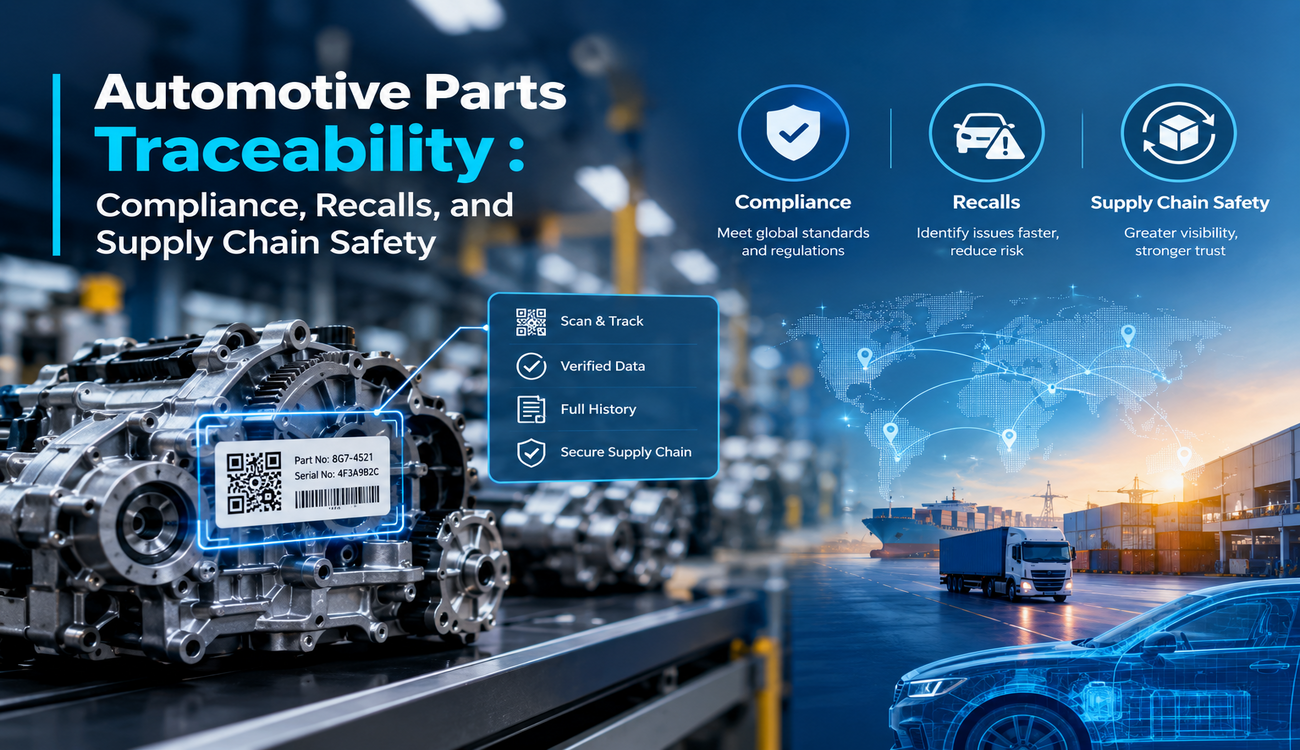
This is where Automotive Parts Traceability becomes essential. It enables manufacturers and suppliers to maintain a connected record of components throughout their lifecycle, from sourcing and production to assembly, distribution, and after-sales service. More than a method of tracking parts, traceability has become an important foundation for regulatory compliance, faster recalls, quality management, and safer automotive supply chains.
Why Traceability Matters in the Automotive Industry
Modern automotive manufacturing depends on collaboration between OEMs, Tier 1 suppliers, Tier 2 suppliers, logistics providers, and component manufacturers. A single part may pass through several organizations before reaching the final vehicle assembly line. Without reliable traceability, connecting a finished vehicle to the precise history of its components can become difficult.
Traceability creates a digital chain of information that links parts with their suppliers, production batches, inspection records, locations, and vehicle assemblies. This information gives manufacturers greater visibility into the movement and condition of components throughout the supply chain.
The importance becomes even greater when dealing with safety-critical components. A defect in a braking component, steering system, battery component, or electronic control unit can create serious safety consequences. Being able to identify the affected production batch quickly can help manufacturers contain the issue before it becomes widespread.
How Automotive Parts Traceability Supports Compliance
Automotive manufacturers operate in an environment where regulatory expectations and quality standards continue to evolve. Documentation, supplier accountability, product identification, and quality records are essential for demonstrating that components meet applicable requirements.
Maintaining Accurate Component Records
A robust traceability system connects individual parts or batches with important information such as supplier details, manufacturing dates, lot numbers, inspection results, and production conditions. Instead of relying on disconnected spreadsheets or paper documentation, manufacturers can create a centralized source of information.
This makes it easier to retrieve evidence during audits, quality investigations, or regulatory reviews. When information can be accessed quickly and accurately, organizations can demonstrate stronger control over their manufacturing processes.
Strengthening Supplier Accountability
Automotive supply chains involve multiple layers of suppliers, making visibility beyond direct suppliers increasingly important. Traceability allows organizations to establish clearer relationships between components and their sources.
If a quality issue originates from a particular supplier or production batch, manufacturers can identify the affected materials and determine whether those components entered other production facilities. This helps organizations work with suppliers more effectively and establish stronger quality controls across the supply network.
Improving Recall Management
Vehicle recalls can be expensive, disruptive, and damaging to customer confidence. One of the biggest challenges during a recall is identifying exactly which vehicles contain the defective component.
Without detailed component-level information, manufacturers may need to inspect or recall a much larger population of vehicles than necessary. This increases operational costs and places additional pressure on dealers, service centers, and customers.
Identifying Affected Components Faster
Automotive Parts Traceability enables manufacturers to connect components with specific production batches, vehicle identification numbers, assembly lines, and distribution records. If a defective component is discovered, organizations can use this information to determine the potential scope of the problem.
Instead of investigating the entire vehicle population, teams can narrow the affected range based on reliable production and component data. This can significantly improve recall accuracy and reduce unnecessary inspections.
Reducing Recall Costs
A targeted recall can help manufacturers reduce costs associated with transportation, replacement parts, labor, inspections, and customer communication. It can also prevent unnecessary disruption for vehicle owners whose vehicles contain unaffected components.
When traceability information is available in real time, quality teams can move more quickly from defect detection to containment and corrective action. Faster decisions can reduce the potential impact of a problem across the supply chain.
Enhancing Supply Chain Safety
Supply chain safety is not limited to responding to defects after they occur. It also involves identifying risks early and preventing questionable components from moving further through the manufacturing process.
Traceability systems can connect inspection data, production information, supplier records, and logistics events. This creates a clearer picture of what is happening throughout the component lifecycle.
Preventing Defective Parts from Moving Forward
When quality inspection identifies a component that does not meet required specifications, traceability information can help isolate the affected batch. Production teams can determine where those parts are stored, whether they have entered assembly, and whether additional locations may have received them.
This supports faster containment and reduces the possibility of defective components reaching finished vehicles.
Improving Quality Investigation
When a defect occurs, manufacturers need to understand not only what happened but also why it happened. Traceability provides historical information that can support root-cause analysis.
Teams can examine supplier batches, machine information, inspection results, production dates, environmental conditions, and process changes associated with affected components. By connecting these data points, organizations can identify patterns that may otherwise remain hidden.
Technologies Enabling Modern Traceability
Traditional identification methods are increasingly being combined with digital technologies to improve visibility and accuracy. RFID, barcodes, IoT sensors, cloud platforms, machine vision, and analytics can work together to create a connected traceability environment.
RFID and Barcode Identification
RFID and barcode technologies provide reliable ways to identify and track automotive components. Barcodes can capture part numbers, serial numbers, and batch information, while RFID can enable faster identification without requiring direct line-of-sight scanning.
These technologies can be used across manufacturing plants, warehouses, assembly lines, and distribution centers to maintain consistent component identification.
IoT and Real-Time Monitoring
IoT devices can provide additional information about the condition and location of components. Sensors can monitor variables such as temperature, humidity, vibration, or movement when components require controlled handling or transportation.
When connected to a centralized platform, this information can help organizations identify potential risks before they affect production or product quality.
Cloud-Based Traceability Platforms
Cloud-based systems can bring information from suppliers, factories, warehouses, logistics operations, and service locations into a connected environment. This allows authorized teams to access traceability data across different facilities and locations.
Cloud platforms can also support integration with ERP, MES, warehouse management, quality management, and supply chain systems, reducing information silos.
Building a More Resilient Automotive Supply Chain
Supply chain disruptions can originate from many sources, including supplier shortages, transportation delays, quality problems, geopolitical events, and unexpected production changes. Traceability can help manufacturers understand where components are located and how disruptions may affect production.
With better visibility, organizations can identify alternative sources, isolate affected inventory, and make informed decisions about production planning. This makes traceability an important part of building supply chain resilience.
Automotive Parts Traceability also supports collaboration between OEMs and suppliers. When organizations share accurate and timely information, they can coordinate quality investigations, inventory decisions, and corrective actions more efficiently.
Overcoming Traceability Challenges
Despite its benefits, implementing traceability across an automotive supply chain requires careful planning. Organizations often operate with legacy systems, different identification standards, inconsistent supplier data, and disconnected databases.
Integrating Existing Systems
Many manufacturers already use ERP, MES, WMS, PLM, and quality management platforms. A modern traceability solution should work with these systems rather than creating another isolated information source.
Integration allows organizations to connect existing operational data and create a consistent view of component movement and history.
Standardizing Data Across Suppliers
Traceability is only as reliable as the data entering the system. Different suppliers may use different identifiers, formats, or processes. Establishing common data standards and clear supplier requirements can improve the quality of information throughout the supply chain.
Organizations should also establish governance processes for data validation, access control, and record retention.
The Future of Automotive Traceability
The future of traceability is moving toward more connected, automated, and intelligent supply chains. Artificial intelligence and advanced analytics can help manufacturers identify unusual patterns, predict quality risks, and analyze large volumes of production data.
Digital twins can provide another layer of visibility by creating digital representations of physical products, production processes, and supply chain activities. When combined with traceability data, they can help organizations understand how individual components move through complex manufacturing environments.
As vehicles become increasingly software-defined and electronically connected, traceability will also extend beyond traditional mechanical components. Batteries, sensors, semiconductors, electronic control units, and software-linked components will require stronger lifecycle visibility.
Conclusion
Automotive manufacturing requires more than efficient production. It requires the ability to verify component quality, demonstrate compliance, respond quickly to defects, and protect customers throughout the vehicle lifecycle. Reliable traceability provides the information foundation needed to achieve these goals.
Automotive Parts Traceability helps organizations connect suppliers, components, production processes, vehicles, and service activities through a consistent flow of information. By improving visibility, manufacturers can manage recalls more precisely, strengthen supplier accountability, reduce quality risks, and build safer and more resilient supply chains.
As automotive supply chains become increasingly digital and interconnected, traceability will continue to evolve from a compliance requirement into a strategic capability. Organizations that invest in accurate identification, connected data, real-time visibility, and intelligent analytics will be better positioned to manage complexity while maintaining quality, safety, and customer trust.
FAQs
Q1. What is Automotive Parts Traceability?
Automotive Parts Traceability is the process of tracking and recording the history, movement, origin, and usage of automotive components throughout the supply chain. It helps manufacturers identify suppliers, production batches, inspection records, and vehicle assemblies associated with specific parts.
Q2. Why is traceability important for automotive recalls?
Traceability helps manufacturers quickly identify defective components and determine which vehicles or production batches may be affected. This allows companies to conduct more targeted recalls, reduce unnecessary inspections, contain safety risks, and respond to quality issues more efficiently.
Q3. How does traceability improve automotive supply chain safety?
Traceability provides visibility into where components come from, how they move through manufacturing, and where they are ultimately used. By connecting supplier, production, inspection, and logistics data, manufacturers can identify quality problems earlier and prevent potentially defective components from progressing through the supply chain.
Q4. Which technologies are used for automotive parts traceability?
Automotive manufacturers commonly use technologies such as RFID, barcodes, IoT sensors, cloud platforms, machine vision, and data analytics. These technologies can help identify components, monitor their movement, capture production information, and connect data across manufacturing and supply chain systems.
Q5. How can automotive manufacturers improve their traceability systems?
Manufacturers can improve traceability by standardizing component identification, integrating ERP and manufacturing systems, improving supplier data quality, and using automated identification technologies. A centralized digital platform can further improve visibility by connecting component, production, quality, inventory, and logistics information.
