
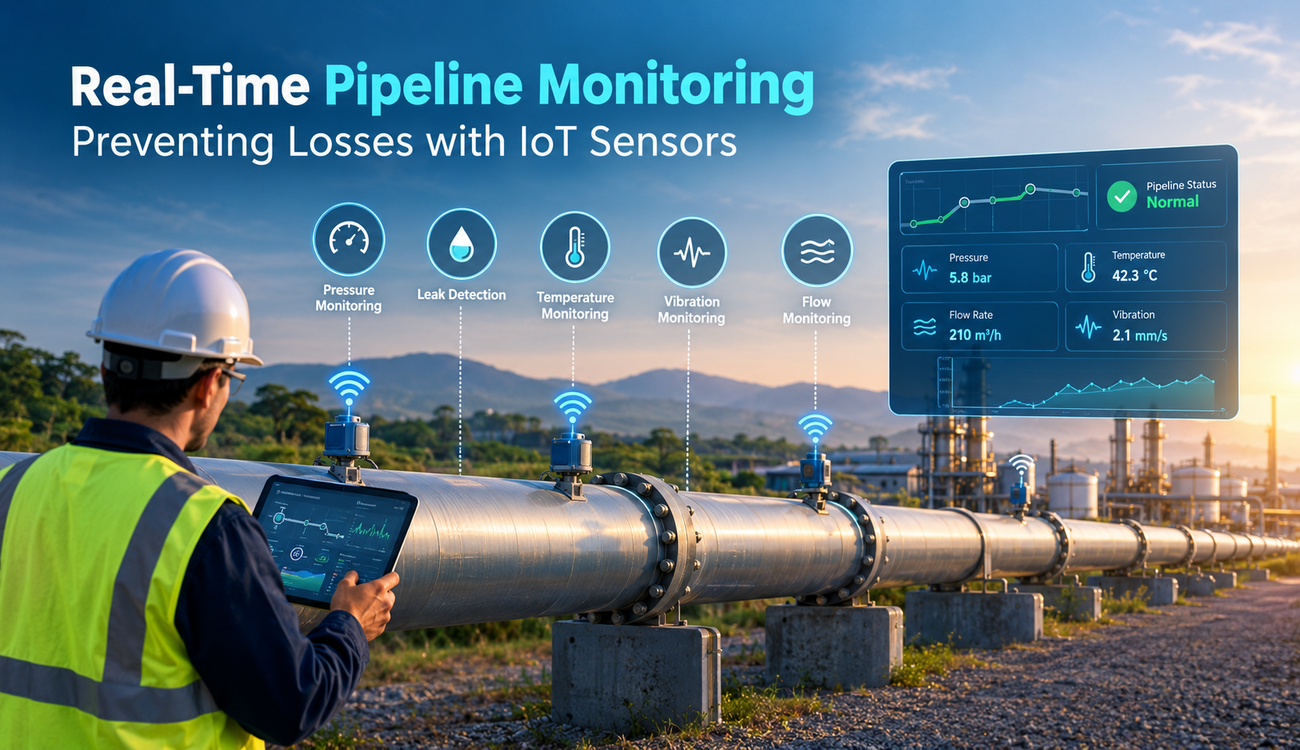
Pipelines are among the most important assets in industries such as oil and gas, water distribution, chemicals, pharmaceuticals, and manufacturing. They transport valuable liquids, gases, and other materials across long distances, often operating continuously under pressure and in challenging environments. A small leak, unexpected pressure change, corrosion issue, or equipment failure can quickly develop into a major operational and financial problem. Traditional inspection methods may identify problems only after they have already affected operations. This is where Real-Time Pipeline Monitoring with IoT sensors is changing how organizations detect risks, protect infrastructure, and prevent losses.
By collecting continuous data from critical points across a pipeline network, IoT-enabled monitoring systems can provide operators with immediate visibility into pressure, temperature, flow, vibration, leakage indicators, and other operating conditions. Instead of depending entirely on periodic inspections or manual readings, organizations can use connected sensors and intelligent analytics to understand what is happening across their pipelines at any given moment. This shift from reactive maintenance to continuous monitoring can improve operational reliability while helping organizations respond to potential problems before they become costly incidents.
Understanding Real-Time Pipeline Monitoring
Real-Time Pipeline Monitoring refers to the continuous observation of pipeline conditions using connected sensors, communication networks, software platforms, and data analytics. Sensors installed at strategic locations collect operational data and transmit it to a centralized monitoring platform. The system can then process this information, identify abnormal patterns, and notify relevant teams when conditions move outside predefined thresholds.
Unlike conventional inspection approaches that provide information at specific intervals, real-time monitoring creates a continuous stream of operational data. This allows pipeline operators to see changes as they happen rather than waiting for the next inspection cycle. For example, an unusual drop in pressure combined with an unexpected change in flow rate may indicate a potential leak. Detecting such changes early gives maintenance and operations teams more time to investigate and take corrective action.
Why Continuous Visibility Matters
Pipeline networks can extend across large geographical areas, making manual supervision difficult and expensive. Remote sections may be particularly challenging to inspect regularly, while underground or underwater pipelines can create additional monitoring difficulties. Continuous sensor-based visibility reduces dependence on physical observation by allowing operators to monitor critical conditions remotely.
The value of this approach goes beyond detecting failures. Historical sensor data can help organizations understand normal operating patterns, identify gradual deterioration, and recognize conditions that may contribute to future failures. This creates a stronger foundation for predictive maintenance and long-term asset management.
How IoT Sensors Support Pipeline Monitoring
IoT sensors form the foundation of connected pipeline monitoring systems. Different sensors can be deployed according to the characteristics of the pipeline, transported material, environmental conditions, and operational requirements. Pressure sensors can identify unusual pressure variations, while flow sensors help determine whether material is moving through the pipeline as expected. Temperature sensors can detect abnormal thermal conditions, and vibration sensors can identify mechanical disturbances that may indicate equipment or structural issues.
Pressure and Flow Monitoring
Pressure and flow are two of the most important indicators of pipeline health. A sudden pressure decline may suggest leakage, blockage, or equipment malfunction, while unexpected flow variations can indicate changes in system performance. By continuously monitoring these parameters, IoT systems can identify deviations from normal operating conditions.
When pressure and flow data are analyzed together, organizations can gain deeper insight into potential pipeline problems. A significant difference between expected and measured flow, for instance, can trigger an investigation before material losses become substantial. This is particularly important in industries where transported materials have high financial value or present environmental risks.
Temperature and Vibration Sensing
Temperature monitoring becomes important when pipelines transport materials that require controlled operating conditions. Abnormal temperature changes may indicate insulation problems, equipment failures, environmental influences, or changes in the transported substance.
Vibration sensors provide another layer of visibility, particularly around pumps, valves, compressors, and other mechanical components. Changes in vibration patterns can sometimes indicate developing mechanical problems before a complete equipment failure occurs. Combining these measurements with other sensor data allows monitoring platforms to create a broader picture of pipeline performance.
Detecting Leaks Before They Become Major Losses
Leakage is one of the most serious challenges associated with pipeline operations. A small leak may initially appear insignificant, but over time it can result in product loss, environmental damage, operational disruption, regulatory consequences, and costly repairs. Real-Time Pipeline Monitoring helps organizations identify potential leakage conditions much earlier by continuously analyzing multiple operational parameters.
Using Multiple Data Signals
Modern monitoring systems do not necessarily depend on a single sensor reading. Instead, they can analyze relationships between pressure, flow, temperature, acoustic signals, and other measurements. When several indicators change simultaneously, the system can generate an alert for further investigation.
This approach can reduce unnecessary responses caused by isolated sensor fluctuations. Intelligent analytics can compare current conditions with historical operating patterns and predefined thresholds to determine whether an event requires attention. As monitoring technologies become more sophisticated, machine learning can also support anomaly detection by identifying patterns that differ from normal pipeline behavior.
Faster Response to Abnormal Conditions
Early detection is valuable because response time can directly affect the scale of a loss. When a monitoring platform identifies a potential leak or abnormal condition, alerts can be delivered to control rooms, maintenance teams, or designated personnel. Organizations can then investigate the affected section and follow established emergency procedures.
Faster awareness can help limit the duration of an incident and reduce the amount of material lost. It can also help organizations coordinate maintenance resources more efficiently instead of discovering the problem through customer complaints, environmental observations, or delayed manual inspections.
Predictive Maintenance Through IoT Data
One of the major advantages of connected pipeline monitoring is the ability to move beyond basic fault detection toward predictive maintenance. Traditional maintenance schedules are often based on fixed intervals or reactive repairs. However, pipeline components do not necessarily deteriorate at the same rate. Continuous data provides an opportunity to understand actual asset conditions and identify warning signs before failure.
Identifying Early Signs of Equipment Degradation
IoT sensors can continuously record operating conditions around pumps, valves, joints, compressors, and other important components. Over time, these measurements can reveal gradual changes in performance. Increasing vibration, repeated pressure fluctuations, unusual temperature behavior, or changes in flow patterns may indicate that a component requires inspection.
Maintenance teams can use these insights to investigate potential issues before they result in unplanned downtime. This can support condition-based maintenance strategies where maintenance activities are influenced by actual equipment conditions rather than relying solely on predetermined schedules.
Reducing Unplanned Downtime
Unplanned pipeline downtime can disrupt production, transportation, supply schedules, and customer commitments. In industries where pipelines are part of a continuous production process, even a relatively short interruption can have significant operational consequences.
Real-Time Pipeline Monitoring supports earlier intervention by giving maintenance teams access to current asset information. When organizations understand where problems are emerging, they can plan inspections, replacement activities, and maintenance resources more effectively. This can reduce unexpected interruptions while improving the overall utilization of maintenance teams.
Improving Pipeline Safety and Operational Control
Pipeline monitoring is not only about preventing financial losses. Safety is another critical consideration, particularly when pipelines transport hazardous, flammable, toxic, or high-pressure materials. A system that continuously monitors operating conditions can help organizations recognize potentially dangerous situations earlier.
Monitoring High-Risk Conditions
IoT-based systems can establish operating thresholds for parameters such as pressure and temperature. When readings move beyond acceptable ranges, alerts can notify operators so they can assess the situation. This provides an additional layer of protection alongside established safety systems and operational procedures.
Remote monitoring can also reduce the need for personnel to repeatedly travel to difficult or hazardous pipeline locations for routine observations. Teams can first assess sensor data remotely and determine whether physical inspection is necessary.
Supporting Faster Decision-Making
Large pipeline networks can generate significant volumes of operational information. Without centralized monitoring, this information may remain scattered across different systems or inspection records. A connected platform can bring sensor data together and present important conditions through dashboards, alerts, and historical trends.
This gives operators a clearer understanding of what is happening across the network. Instead of manually reviewing every data point, teams can focus their attention on anomalies and areas that require investigation.
The Role of Analytics in Connected Pipeline Operations
Sensors generate data, but data alone does not prevent losses. Organizations need analytics capabilities that can transform raw measurements into useful operational insights. Monitoring platforms can compare real-time data with historical information, operating thresholds, and expected patterns to identify anomalies.
From Data Collection to Actionable Insights
Analytics can help distinguish normal fluctuations from conditions that require attention. For example, a temporary change in flow may be expected during a planned operational adjustment, while a similar change combined with an unexplained pressure decline may require investigation.
Advanced analytics can also support trend analysis. Instead of looking only at the current reading, operators can examine how a parameter has changed over hours, days, or months. This broader context can help identify gradual deterioration that may otherwise go unnoticed.
Integrating Monitoring With Existing Systems
For organizations with established operational technology and enterprise software, IoT monitoring does not necessarily need to operate as an isolated platform. Pipeline sensor data can potentially be integrated with SCADA systems, maintenance management platforms, ERP solutions, cloud environments, and other operational applications.
Such integration can create a connected information flow from physical assets to operational teams. When monitoring data is connected with maintenance records and business processes, organizations can move closer to a unified approach to asset management.
Challenges in Implementing IoT-Based Pipeline Monitoring
Although IoT can significantly improve pipeline visibility, successful implementation requires careful planning. Pipeline environments can be harsh, remote, and difficult to access. Sensors must be selected according to environmental conditions, pressure ranges, temperature requirements, and the characteristics of the transported material.
Connectivity is another important consideration. Remote pipelines may not always have reliable cellular or wired connectivity, making organizations consider technologies such as satellite communication, long-range wireless networks, edge computing, or hybrid architectures.
Cybersecurity must also be addressed because connected monitoring systems expand the digital footprint of critical infrastructure. Secure device authentication, encrypted communication, access controls, network segmentation, software updates, and continuous security monitoring should be incorporated into the architecture.
Building a Scalable Pipeline Monitoring Strategy
Organizations considering IoT-based monitoring should begin with clearly defined operational objectives. Rather than installing sensors without a specific purpose, teams should identify the pipeline sections, assets, and failure scenarios where improved visibility can provide the greatest value.
A phased implementation can allow organizations to test sensor performance, connectivity, alert mechanisms, and analytics before expanding across the entire network. The collected data can also help teams refine thresholds and reduce false alarms over time.
Real-Time Pipeline Monitoring becomes more valuable when it is treated as part of a broader digital operations strategy rather than simply a sensor deployment project. Connecting monitoring data with maintenance workflows, analytics, dashboards, and response procedures can help turn continuous visibility into measurable operational improvements.
The Future of IoT-Enabled Pipeline Management
The future of pipeline monitoring is likely to involve greater use of artificial intelligence, edge computing, digital twins, and predictive analytics. Edge devices can process selected sensor data closer to the pipeline, reducing the need to send every measurement to a central platform and enabling faster local responses.
Digital twin technologies can also create virtual representations of pipeline assets and operating environments. When combined with live sensor information, these models can help organizations understand current conditions, simulate scenarios, and analyze potential risks.
Artificial intelligence can further support anomaly detection by learning from historical operating patterns. As organizations accumulate larger volumes of pipeline data, intelligent systems can potentially identify subtle relationships between operating conditions and developing faults.
Conclusion
IoT sensors are changing how organizations approach pipeline asset management by replacing limited visibility with continuous operational awareness. Pressure, flow, temperature, vibration, and other measurements can provide valuable information about pipeline health and help teams detect abnormal conditions earlier.
The real benefit of Real-Time Pipeline Monitoring comes from connecting sensor data with analytics, alerts, maintenance processes, and operational decision-making. When implemented with appropriate connectivity, cybersecurity, and integration strategies, IoT-enabled monitoring can help organizations reduce material losses, improve maintenance planning, strengthen safety practices, and minimize unexpected downtime.
As pipeline networks become increasingly connected, organizations that build reliable monitoring capabilities can gain better visibility into the condition and performance of their critical infrastructure. The combination of IoT sensors, intelligent analytics, and proactive maintenance provides a practical path toward safer, more efficient, and more resilient pipeline operations.
FAQs
Q1. What is Real-Time Pipeline Monitoring?
Real-Time Pipeline Monitoring is the continuous tracking of pipeline conditions using IoT sensors, connected devices, communication networks, and monitoring software. It helps organizations monitor parameters such as pressure, flow, temperature, vibration, and potential leakage so operators can identify abnormal conditions and respond before they result in major operational or financial losses.
Q2. How do IoT sensors help prevent pipeline leaks?
IoT sensors continuously collect information from different sections of a pipeline. Changes in pressure, flow rate, temperature, vibration, or other operating conditions can indicate a potential leak. Monitoring software analyzes these signals and can generate alerts when unusual patterns are detected, allowing teams to investigate and take corrective action more quickly.
Q3. What are the main benefits of IoT-based pipeline monitoring?
IoT-based monitoring can provide continuous asset visibility, earlier anomaly detection, improved maintenance planning, reduced unplanned downtime, and better operational control. It can also support safety by helping teams identify potentially hazardous conditions sooner and reducing dependence on manual inspections in remote or difficult-to-access pipeline locations.
Q4. Can pipeline monitoring systems support predictive maintenance?
Yes. Continuous sensor data can help organizations identify gradual changes in equipment performance and operating conditions. Analytics can detect trends such as increasing vibration, repeated pressure fluctuations, or unusual temperature patterns. These insights can help maintenance teams schedule inspections or repairs before developing problems lead to unexpected equipment failure.
Q5. What challenges should businesses consider when implementing IoT pipeline monitoring?
Organizations should consider sensor selection, connectivity, environmental conditions, data management, cybersecurity, system integration, and scalability. Remote pipeline locations may require specialized communication technologies, while connected systems need appropriate security controls. A phased implementation can help organizations validate the technology and processes before expanding monitoring across the wider network.
