
Oil and gas pipelines are essential for transporting crude oil, natural gas, and refined petroleum products across long distances. These networks often pass through remote locations, challenging terrain, and environmentally sensitive areas, making continuous monitoring a critical requirement for safe and efficient operations. Traditional inspection methods can identify certain problems, but they may not provide the real-time visibility needed to respond quickly to leaks, pressure fluctuations, equipment failures, or unexpected operating conditions. An IoT Pipeline Monitoring System helps address these challenges by connecting field sensors, communication networks, monitoring platforms, and automated alerts.
It enables pipeline operators to collect operational data continuously, identify unusual conditions, and make informed decisions before minor issues develop into serious incidents. By integrating Internet of Things (IoT) technology into existing infrastructure, oil and gas companies can improve operational visibility, strengthen safety procedures, and reduce avoidable maintenance expenses.
Implementing this technology requires more than installing sensors along a pipeline. Companies must evaluate their infrastructure, select suitable monitoring equipment, establish reliable connectivity, integrate data systems, and define clear procedures for responding to alerts. This practical guide explains how organizations can plan and implement IoT-based pipeline monitoring effectively.
What Is an IoT Pipeline Monitoring System?
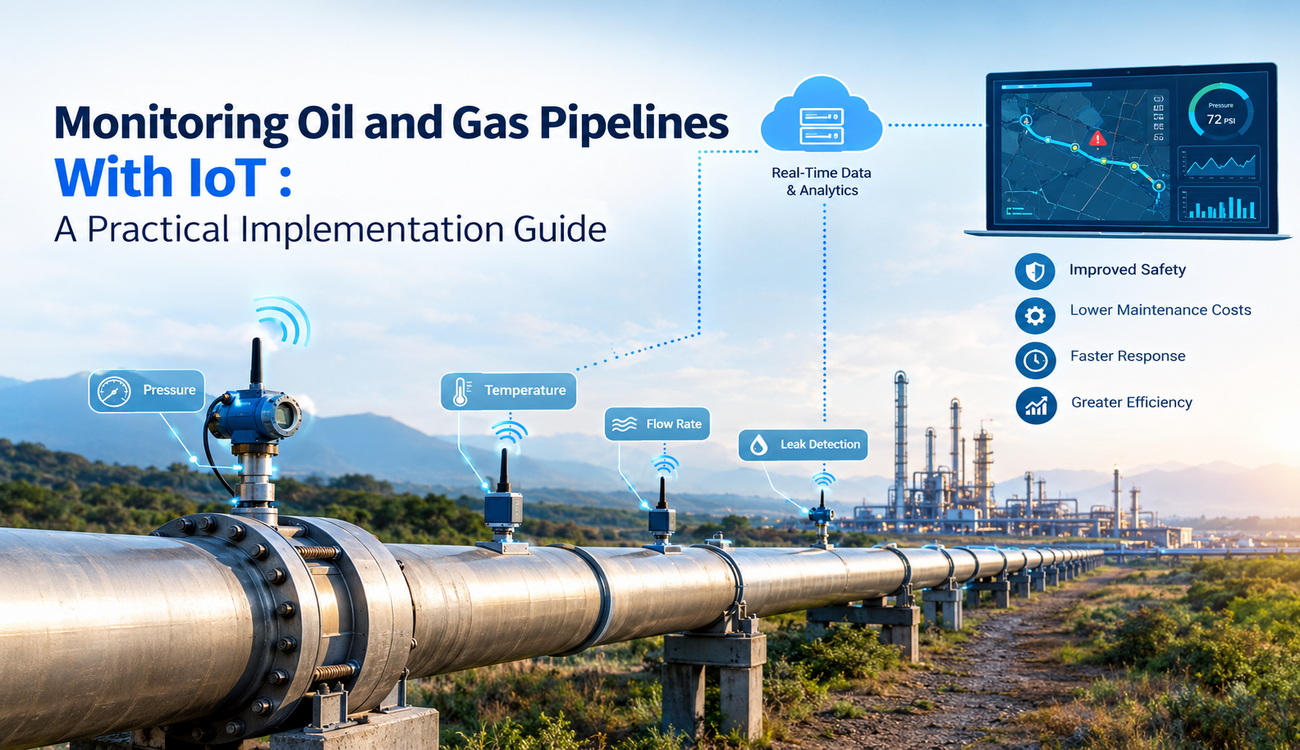
An IoT Pipeline Monitoring System is a connected technology solution that uses sensors, communication devices, software platforms, and analytics to monitor pipeline conditions in real time. It gathers information about operational parameters such as pressure, temperature, flow rate, vibration, and potential leakage indicators.
The collected information travels through communication networks to a centralized monitoring platform, where operators can review pipeline conditions, identify abnormal readings, and receive alerts when predefined thresholds are exceeded. Depending on the system’s capabilities, analytical models can also identify developing patterns that may indicate equipment deterioration or operational inefficiencies.
For oil and gas operators, this approach supports continuous monitoring across distributed pipeline networks. Instead of relying exclusively on scheduled inspections or manual reporting, teams gain access to timely information that helps them prioritize maintenance activities and respond to emerging risks.
Why IoT is Important for Oil and Gas Pipeline Monitoring
Improving Leak Detection and Response
Pipeline leaks can result in financial losses, environmental damage, operational interruptions, and serious safety risks. Detecting leaks early is therefore one of the most important objectives of pipeline monitoring.
IoT-enabled sensors can identify unusual pressure changes, unexpected flow differences, temperature variations, or other indicators associated with potential leakage. Advanced monitoring platforms can analyze these signals together to help distinguish abnormal events from routine operational fluctuations.
An IoT Pipeline Monitoring System can notify operators when readings suggest a potential leak, allowing them to investigate the affected section and initiate appropriate response procedures. Detection performance depends on sensor placement, pipeline characteristics, operating conditions, and the analytical methods used, so monitoring systems must be tested and calibrated carefully.
Strengthening Pipeline Safety
Oil and gas pipelines operate under changing pressure, temperature, and environmental conditions. Excessive pressure, corrosion, mechanical stress, and external interference can increase the likelihood of equipment damage or pipeline failure.
Continuous monitoring helps operators recognize potentially unsafe conditions before they escalate. When connected to suitable alarms and established emergency procedures, monitoring platforms provide additional information for assessing risks and coordinating timely interventions.
Reducing Maintenance Costs
Traditional maintenance schedules often depend on periodic inspections, even when individual pipeline sections experience different levels of wear and operational stress. This approach can result in unnecessary maintenance activities or delayed identification of developing faults.
IoT monitoring supports condition-based maintenance by helping teams identify equipment that requires closer inspection. Maintenance personnel can prioritize interventions according to actual operating data, potentially reducing unnecessary site visits, emergency repairs, and unplanned downtime.
Supporting Operational Efficiency
Pipeline operators need accurate information about flow rates, pressure levels, equipment performance, and transportation conditions to maintain efficient operations. IoT monitoring provides a consolidated view of these parameters, helping teams identify irregularities and investigate performance losses.
When combined with operational analytics, an IoT Pipeline Monitoring System can help organizations improve resource allocation, coordinate maintenance schedules, and make better-informed decisions across geographically distributed infrastructure.
Key Components of an IoT Pipeline Monitoring System
Smart Sensors and Field Devices
Sensors form the foundation of pipeline monitoring because they collect the physical measurements required to assess operating conditions. Pressure sensors measure internal pressure, temperature sensors track thermal changes, and flow meters measure the movement of oil or gas through the network.
Additional devices can monitor vibration, corrosion-related indicators, equipment condition, and environmental factors. Acoustic sensors and specialized leak-detection equipment may also be used where the application requires them.
Sensor selection should reflect the pipeline’s operating pressure, temperature range, fluid characteristics, installation environment, and required measurement accuracy. Equipment installed in hazardous locations must also meet applicable safety and hazardous-area requirements.
Communication Networks
Monitoring devices must transmit their readings reliably to gateways or centralized platforms. Depending on pipeline location and infrastructure availability, organizations may use cellular networks, industrial wireless technologies, fiber-optic connections, satellite communication, or long-range radio systems.
Remote pipelines may require a combination of communication technologies to maintain coverage across difficult terrain. Engineers should evaluate bandwidth, latency, power consumption, environmental conditions, and connectivity costs before selecting a network.
IoT Gateways and Edge Computing
IoT gateways collect information from connected devices and transfer it to monitoring platforms. They can also perform initial data processing, convert communication protocols, and help connect modern monitoring equipment with existing industrial systems.
Edge computing enables selected analysis to take place near the pipeline rather than relying entirely on a distant server. For example, a local gateway can identify a critical pressure threshold and trigger an immediate alert even when communication with the central platform is temporarily unavailable.
Centralized Monitoring and Analytics
A monitoring platform combines incoming sensor data into dashboards, reports, alerts, and historical records. Operators can use these tools to compare readings, investigate abnormal conditions, and review performance across multiple pipeline segments.
Advanced platforms may incorporate machine learning to identify unusual operating patterns or estimate equipment degradation. However, analytical predictions should complement validated engineering methods and established safety controls rather than replace them.
A Practical Guide to Implementing IoT Pipeline Monitoring
Step 1: Assess Existing Pipeline Infrastructure
Implementation should begin with a detailed assessment of the pipeline network, operating environment, and existing monitoring capabilities. Engineers need to understand pipeline routes, material specifications, pressure ranges, flow characteristics, inspection records, and known risk areas.
The assessment should identify locations where leakage, corrosion, pressure fluctuations, external interference, or equipment failures could create significant operational consequences. Existing supervisory control and data acquisition (SCADA) systems, control devices, and communication infrastructure should also be reviewed.
This initial evaluation helps establish clear monitoring objectives and prevents organizations from investing in equipment that does not address their most important operational risks.
Step 2: Define Monitoring Requirements
Once the infrastructure assessment is complete, operators should determine which parameters need continuous monitoring and what conditions require an alert. A pipeline transporting natural gas may require different monitoring priorities from a crude oil pipeline operating under different pressure and environmental conditions.
An IoT Pipeline Monitoring System should be designed around measurable objectives, such as improving leak detection, reducing unplanned shutdowns, identifying abnormal pressure changes, or monitoring critical equipment more effectively.
Organizations should also define acceptable response times, data retention requirements, reporting needs, and responsibilities for investigating alerts. These requirements provide a practical foundation for selecting technologies and evaluating implementation results.
Step 3: Select Sensors and Communication Technologies
The next stage involves selecting sensors, gateways, and communication systems that meet the defined requirements. Device compatibility, measurement accuracy, environmental durability, maintenance needs, and total lifecycle cost should all influence the decision.
Sensor placement is particularly important because monitoring gaps can reduce the effectiveness of the overall system. Engineers should determine installation points according to pipeline risk assessments, hydraulic characteristics, expected leak signatures, and the capabilities of the selected detection technology.
Communication systems must also be evaluated under realistic field conditions. Remote locations may need redundant connectivity, local data buffering, backup power, or alternative transmission paths to improve reliability.
Step 4: Integrate the Monitoring Platform
After the hardware and communication infrastructure are selected, the collected data must be connected to a suitable monitoring platform. This platform should present relevant readings in a format that operators can understand quickly and use during routine operations or emergencies.
Integration with existing SCADA, enterprise asset management, maintenance, and reporting systems can provide a more complete operational picture. However, integration must be planned carefully to avoid disrupting established control processes.
An IoT Pipeline Monitoring System should also include clear alert thresholds, event logging, user access controls, and procedures for handling communication failures. These features help ensure that the platform remains useful and dependable during everyday operations.
Step 5: Establish Data Analytics and Alert Management
Sensor data becomes more valuable when it can be interpreted in the context of normal operating conditions. Analytics tools can compare current readings with historical patterns, identify deviations, and highlight pipeline sections that require further investigation.
For example, a combination of pressure changes and unexpected flow differences may indicate a possible leak, while recurring vibration patterns may suggest mechanical problems with associated equipment. These signals should be evaluated using application-specific rules and validated detection methods.
Alert management is equally important because excessive false alarms can overwhelm operators. Teams should establish appropriate thresholds, prioritize alerts by severity, and define escalation procedures so that critical events receive prompt attention.
Step 6: Conduct Pilot Testing
Before deploying monitoring technology across an entire pipeline network, organizations should test it on a representative section. A pilot project helps engineers evaluate sensor accuracy, communication reliability, dashboard usability, alarm behavior, and integration performance under actual operating conditions.
Testing should include normal operations, expected environmental variations, communication interruptions, and approved simulations of abnormal conditions. Any safety-critical testing must follow appropriate engineering controls and approved procedures.
The results can help identify design weaknesses, refine sensor placement, improve alert thresholds, and estimate the resources required for wider deployment.
Step 7: Scale Deployment and Optimize Performance
Following successful pilot testing, operators can expand the solution to additional pipeline sections according to risk, operational priorities, and available resources. A phased rollout makes it easier to manage installation work, train personnel, and address technical issues without introducing unnecessary disruption.
Regular calibration, software updates, cybersecurity reviews, and communication checks should form part of ongoing system maintenance. Teams should also review performance indicators such as alert accuracy, incident response time, monitoring availability, and unplanned downtime.
Continuous evaluation helps ensure that the monitoring solution remains aligned with changing pipeline conditions and operational requirements.
Cybersecurity Considerations for Connected Pipeline Infrastructure
Connecting pipeline equipment to digital platforms creates additional opportunities for monitoring, but it also introduces cybersecurity risks. Unauthorized access, compromised devices, insecure communication channels, or poorly controlled remote connections can threaten sensitive operational information and industrial systems.
Organizations should use strong authentication, role-based access controls, encrypted communications where appropriate, secure device configurations, and regular vulnerability management. Network segmentation can help separate monitoring environments from critical control systems, while continuous security logging supports the investigation of suspicious activity.
An IoT Pipeline Monitoring System should be designed according to applicable industrial cybersecurity requirements and the organization’s operational risk profile. Security controls must be tested throughout implementation and maintained throughout the system’s lifecycle.
Common Implementation Challenges and How to Address Them
Connectivity in Remote Locations
Pipelines frequently cross areas with limited network coverage. Organizations can address this challenge by combining suitable communication technologies, deploying local gateways, and designing systems that can store data temporarily when connectivity is interrupted.
Sensor Reliability and Data Accuracy
Environmental exposure, equipment deterioration, poor calibration, and incorrect installation can affect sensor performance. Selecting industrial-grade equipment, establishing calibration schedules, and validating incoming data can help maintain reliable monitoring.
Integration With Legacy Systems
Older industrial systems may use communication protocols or data structures that differ from modern IoT platforms. Compatible gateways, carefully planned interfaces, and phased integration can help connect new monitoring capabilities with existing infrastructure.
Managing False Alerts
Poorly configured thresholds or incomplete analytical models can generate excessive notifications. Organizations should validate detection logic, evaluate historical operating data, and periodically review alert performance to improve the quality of notifications.
The Future of IoT in Oil and Gas Pipeline Monitoring
Pipeline monitoring is evolving as edge computing, artificial intelligence, digital twins, and advanced sensing technologies become more capable. These technologies can help operators interpret complex data, model pipeline behavior, identify developing risks, and plan maintenance more effectively.
Digital twins can represent pipeline assets and operating conditions within a digital environment, supporting scenario analysis and performance evaluation. AI-based analytics may identify patterns that conventional threshold-based monitoring cannot easily detect, while edge computing can support faster local responses when connectivity is limited.
Future deployments will likely place greater emphasis on interoperability, cybersecurity, reliable data management, and integration with existing industrial controls. The most effective solutions will combine digital intelligence with engineering expertise, established safety procedures, and human oversight.
Conclusion
An IoT Pipeline Monitoring System helps oil and gas companies monitor pipeline conditions, improve operational visibility, and respond to potential problems more effectively. By combining connected sensors, reliable communication networks, centralized dashboards, and advanced analytics, organizations can achieve more proactive and data-driven pipeline management.
A successful implementation begins with infrastructure assessment, clearly defined monitoring objectives, suitable equipment selection, and careful integration with existing industrial systems. Pilot testing, cybersecurity planning, operator training, and continuous performance evaluation are equally important for achieving reliable results.
For organizations planning to modernize their pipeline operations, an IoT Pipeline Monitoring System can provide a practical foundation for improving safety, supporting condition-based maintenance, and strengthening operational decision-making. With the right implementation strategy, oil and gas operators can build more resilient monitoring infrastructure while preparing their pipeline networks for future digital advancements.
FAQs
Q1. What is an IoT Pipeline Monitoring System?
An IoT Pipeline Monitoring System uses connected sensors, communication networks, and monitoring software to track pipeline conditions in real time. It collects data on pressure, temperature, flow rate, and potential leakage indicators, helping oil and gas operators identify abnormal conditions, improve safety, and respond to potential problems more quickly.
Q2. How does IoT help detect oil and gas pipeline leaks?
IoT technology helps detect potential pipeline leaks by monitoring changes in pressure, flow rates, temperature, and acoustic signals. The system analyzes these readings to identify unusual patterns and sends alerts when potential leakage is detected. Detection accuracy depends on sensor placement, pipeline conditions, and the monitoring technology used.
Q3. What are the main benefits of IoT pipeline monitoring?
The main benefits include improved leak detection, enhanced pipeline safety, reduced maintenance costs, fewer unplanned shutdowns, and better operational visibility. IoT monitoring also supports condition-based maintenance by helping teams identify equipment problems early and prioritize inspections based on actual operating data.
Q4. Which technologies are used in IoT pipeline monitoring systems?
Common technologies include pressure and temperature sensors, flow meters, acoustic sensors, IoT gateways, cellular and satellite communication, edge computing, cloud platforms, and data analytics. Depending on operational requirements, companies may also integrate IoT monitoring with SCADA systems, artificial intelligence, and predictive maintenance tools.
Q5. How can companies implement an IoT Pipeline Monitoring System successfully?
Companies should begin by assessing existing pipeline infrastructure and identifying critical monitoring requirements. They should then select appropriate sensors and communication technologies, integrate the monitoring platform with existing systems, establish alerts and cybersecurity controls, and conduct pilot testing. A phased deployment, regular maintenance, and continuous performance evaluation help ensure long-term reliability.
