
In today’s highly competitive supply chain environment, customers expect accurate delivery timelines, real-time shipment updates, and seamless order fulfillment. Businesses can no longer rely on traditional tracking methods that provide limited information about goods in transit. As supply chains become more complex and customer expectations continue to rise, organizations are increasingly investing in Logistics Visibility Services to gain complete transparency across their transportation networks.
Real-time visibility has emerged as a critical capability for logistics providers, manufacturers, retailers, and distributors. By enabling organizations to monitor shipments continuously, identify disruptions early, and make informed decisions, Logistics Visibility Services help reduce delivery failures while improving customer satisfaction and operational efficiency.
This article explores how real-time logistics visibility works, the causes of delivery failures, and the ways modern visibility solutions help organizations build more reliable and resilient supply chains.
Table of Contents
ToggleUnderstanding Real-Time Logistics Visibility
Real-time logistics visibility refers to the ability to track, monitor, and analyze the movement of goods throughout the supply chain as events occur. It provides stakeholders with up-to-date information regarding shipment location, transit status, estimated arrival times, delays, route deviations, and delivery performance.
Unlike traditional tracking systems that rely on periodic updates, modern Logistics Visibility Services leverage technologies such as GPS, IoT sensors, RFID, telematics, cloud platforms, and artificial intelligence to provide continuous shipment monitoring. This enables logistics managers to gain instant insights into transportation activities and take corrective action before minor issues escalate into major delivery disruptions.
The ability to access accurate, real-time information allows organizations to improve coordination among suppliers, carriers, warehouses, and customers while ensuring greater accountability throughout the logistics process.
Why Delivery Failures Continue to Challenge Supply Chains
Delivery failures can occur for numerous reasons, often resulting in increased operational costs, customer dissatisfaction, and reputational damage. As global supply chains become more interconnected, the risks associated with shipment delays and failed deliveries continue to grow.
One of the primary causes of delivery failures is the lack of shipment visibility. When businesses cannot accurately track goods in transit, they often remain unaware of delays, route deviations, vehicle breakdowns, or weather-related disruptions until it is too late to respond effectively.
Communication gaps between supply chain stakeholders also contribute significantly to delivery failures. In many organizations, information remains siloed across multiple systems, making it difficult to coordinate responses to transportation issues in real time.
Inaccurate estimated delivery times, inefficient route planning, unexpected traffic conditions, and poor carrier performance further increase the likelihood of missed deliveries. Without a comprehensive visibility solution, logistics teams often struggle to identify the root causes of these problems and implement timely corrective measures.
The Growing Importance of Logistics Visibility Services
As supply chains become increasingly digital, organizations are recognizing that visibility is no longer a competitive advantage but a business necessity. Logistics Visibility Services provide a centralized platform that consolidates transportation data from multiple sources and transforms it into actionable insights.
By creating a unified view of shipment activities, these solutions allow businesses to monitor logistics operations across various transportation modes, carriers, and geographic regions. This enhanced visibility helps organizations detect potential issues earlier, improve planning accuracy, and strengthen collaboration across the supply chain ecosystem.
The ability to predict and prevent disruptions before they impact customers is one of the key reasons why companies are investing heavily in visibility technologies.
How Real-Time Logistics Visibility Reduces Delivery Failures
Early Detection of Transportation Delays
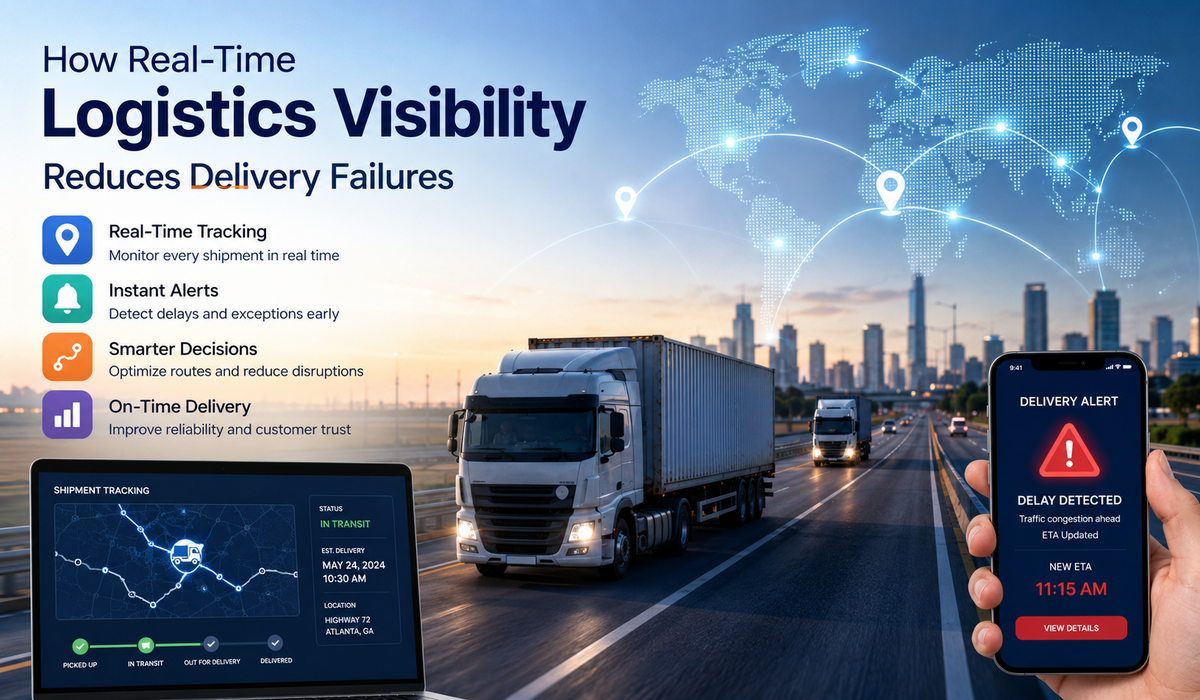
One of the most significant benefits of real-time visibility is the ability to identify transportation delays as soon as they occur. Instead of discovering problems after a shipment has already missed its delivery window, logistics teams receive immediate alerts regarding delays caused by traffic congestion, weather conditions, customs issues, or operational bottlenecks.
With timely information available, organizations can proactively communicate with customers, adjust delivery schedules, or implement contingency plans to minimize disruptions.
This proactive approach significantly reduces the likelihood of failed deliveries and improves overall supply chain responsiveness.
Improved Estimated Time of Arrival Accuracy
Accurate delivery expectations play a crucial role in customer satisfaction. Traditional tracking systems often provide static estimates that fail to account for changing transportation conditions.
Modern Logistics Visibility Services utilize real-time data and predictive analytics to calculate more accurate estimated times of arrival. By continuously analyzing factors such as traffic patterns, route conditions, carrier performance, and shipment progress, these systems can provide dynamic delivery predictions.
Improved ETA accuracy enables businesses to manage customer expectations effectively while reducing the number of missed deliveries resulting from inaccurate scheduling.
Proactive Exception Management
Supply chains encounter unexpected disruptions every day. Vehicle breakdowns, port congestion, weather events, labor shortages, and route deviations can all impact shipment performance.
Real-time visibility platforms automatically identify exceptions and notify relevant stakeholders when predefined thresholds are exceeded. Logistics teams can immediately investigate the issue, determine its impact, and implement corrective actions before delivery commitments are compromised.
By addressing transportation exceptions proactively rather than reactively, organizations can significantly reduce delivery failures and maintain higher service levels.
Enhanced Carrier Performance Monitoring
Carrier performance directly influences delivery success rates. However, many organizations lack the tools necessary to evaluate carrier reliability effectively.
Logistics Visibility Services provide detailed performance metrics that help businesses assess carrier operations based on delivery timeliness, transit efficiency, route compliance, and exception frequency.
With greater visibility into carrier performance, organizations can identify underperforming transportation partners, optimize carrier selection strategies, and negotiate service improvements that contribute to more reliable deliveries.
Better Route Optimization and Planning
Route inefficiencies often result in shipment delays and increased transportation costs. Real-time visibility solutions continuously monitor vehicle movements and transportation conditions, enabling logistics managers to optimize routes dynamically.
When unexpected obstacles arise, such as accidents, road closures, or severe weather conditions, organizations can reroute shipments immediately to avoid delays.
Dynamic route optimization improves delivery reliability while maximizing fleet utilization and reducing fuel consumption.
Strengthening Customer Communication
Customers increasingly expect transparency throughout the delivery process. Lack of communication during shipment delays frequently leads to frustration and negative customer experiences.
By leveraging Logistics Visibility Services, businesses can provide customers with real-time shipment updates, accurate delivery estimates, and immediate notifications regarding potential delays.
Transparent communication helps manage expectations and builds customer trust even when unforeseen disruptions occur. Customers are generally more understanding of delays when they receive timely updates and accurate information.
Faster Response to Supply Chain Disruptions
Global supply chains are vulnerable to numerous external risks, including geopolitical events, natural disasters, infrastructure failures, and regulatory changes.
Real-time visibility provides organizations with the situational awareness needed to respond quickly to emerging disruptions. By identifying affected shipments and alternative transportation options, logistics teams can implement recovery strategies faster and reduce the impact on delivery performance.
The ability to respond rapidly to disruptions contributes significantly to minimizing delivery failures and maintaining operational continuity.
Technologies Powering Modern Logistics Visibility Services
The effectiveness of modern visibility platforms is driven by several advanced technologies working together to create a comprehensive transportation intelligence ecosystem.
GPS tracking systems provide continuous location updates for vehicles and shipments, enabling precise monitoring throughout the transportation journey.
IoT sensors collect valuable environmental and operational data, including temperature, humidity, vibration, and cargo conditions. This information is particularly important for industries handling sensitive or perishable goods.
RFID technology enables automated asset identification and tracking, improving inventory accuracy and shipment traceability.
Artificial intelligence and machine learning algorithms analyze large volumes of transportation data to predict delays, optimize routes, and recommend corrective actions.
Cloud-based platforms facilitate seamless data sharing among suppliers, carriers, logistics providers, and customers, ensuring that all stakeholders have access to the same real-time information.
Together, these technologies create the foundation for advanced Logistics Visibility Services that support more reliable and efficient supply chain operations.
Business Benefits Beyond Delivery Failure Reduction
While reducing delivery failures is a major advantage, the value of Logistics Visibility Services extends far beyond transportation reliability.
Organizations that implement visibility solutions often experience improved inventory management, lower transportation costs, enhanced operational efficiency, and stronger supplier collaboration. Greater transparency also supports regulatory compliance and helps organizations identify opportunities for continuous process improvement.
Additionally, visibility-driven supply chains are better equipped to adapt to changing market conditions and customer demands, providing a significant competitive advantage in today’s dynamic business environment.
As organizations continue to pursue digital transformation initiatives, logistics visibility will play an increasingly important role in supporting data-driven decision-making and long-term supply chain resilience.
Future Trends in Logistics Visibility
The future of logistics visibility is being shaped by emerging technologies that promise even greater levels of transparency and automation.
Artificial intelligence will continue to enhance predictive capabilities, enabling organizations to anticipate disruptions with greater accuracy. Digital twins will provide virtual representations of supply chain operations, allowing businesses to simulate scenarios and optimize logistics strategies proactively.
Blockchain technology is expected to improve shipment traceability and data integrity across complex supply chain networks. Autonomous vehicles and smart transportation systems will further enhance visibility by generating continuous streams of operational data.
As these technologies mature, Logistics Visibility Services will evolve from monitoring tools into intelligent decision-support systems capable of driving autonomous supply chain optimization.
Conclusion
Delivery failures remain one of the most costly and challenging issues facing modern supply chains. Delayed shipments, missed delivery windows, communication breakdowns, and operational inefficiencies can significantly impact customer satisfaction and business performance.
By providing continuous shipment monitoring, predictive insights, proactive exception management, and enhanced stakeholder collaboration, Logistics Visibility Services help organizations address these challenges effectively. Real-time visibility empowers logistics teams to identify risks early, respond quickly to disruptions, and ensure that goods reach their destinations on time.
As supply chains become increasingly complex and customer expectations continue to rise, investing in Logistics Visibility Services is no longer optional. Organizations that embrace real-time visibility will be better positioned to reduce delivery failures, improve operational efficiency, and build resilient supply chains capable of meeting the demands of the modern marketplace.
FAQs
Q1. What are Logistics Visibility Services?
Logistics Visibility Services are technology-driven solutions that provide real-time tracking, monitoring, and analysis of shipments throughout the supply chain. They help organizations improve transparency, reduce disruptions, and enhance delivery performance.
Q2. How do Logistics Visibility Services reduce delivery failures?
These services provide continuous shipment tracking, predictive ETA calculations, exception alerts, route optimization, and proactive disruption management, enabling organizations to address issues before they result in failed deliveries.
Q3. Which industries benefit most from Logistics Visibility Services?
Industries such as retail, manufacturing, healthcare, e-commerce, food and beverage, automotive, and third-party logistics benefit significantly from enhanced shipment visibility and transportation transparency.
Q4. What technologies are used in Logistics Visibility Services?
Common technologies include GPS tracking, IoT sensors, RFID systems, telematics, cloud computing, artificial intelligence, machine learning, and advanced analytics platforms.
Q5. Why is real-time visibility important in supply chain management?
Real-time visibility enables organizations to monitor shipments continuously, improve decision-making, reduce transportation risks, enhance customer communication, and increase overall supply chain efficiency.
