

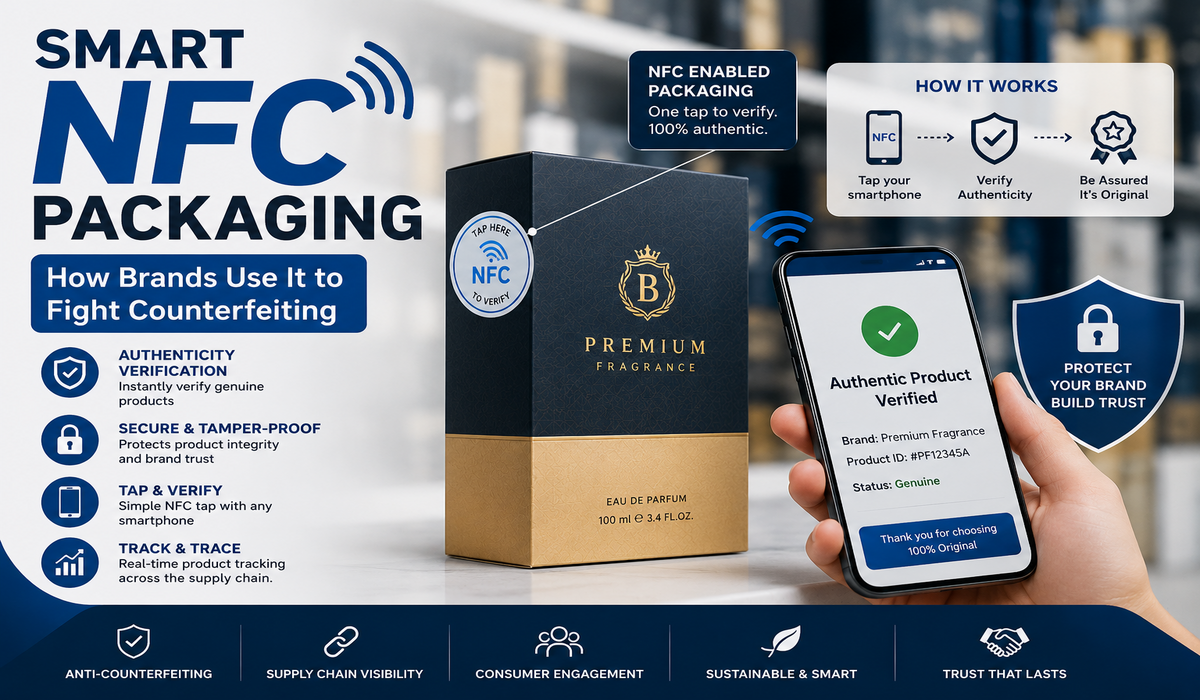
Counterfeit products have become a serious challenge for brands across industries. From luxury goods and electronics to pharmaceuticals, cosmetics, food, and beverages, fake products can enter the market quickly and become difficult to distinguish from genuine ones. Traditional security measures such as printed serial numbers, holograms, barcodes, and labels can help, but counterfeiters are becoming more sophisticated. This is where NFC Packaging is creating a new approach to product authentication and brand protection.
By embedding Near Field Communication (NFC) technology directly into product packaging, brands can give every product a digital identity that can be checked using a compatible smartphone. Instead of relying only on visible security elements, NFC-enabled packaging creates a connection between the physical product and its digital record. This makes authentication more interactive while also giving brands greater visibility into how products move through the market.
What is NFC Packaging?
NFC Packaging refers to product packaging that contains an embedded NFC chip or NFC tag. The tag can store or communicate a unique digital identifier that a smartphone can read when brought close to the packaging. Depending on how the system is designed, the NFC interaction can direct consumers to a verification page, product information, brand website, warranty registration, or other digital experiences.
Unlike a traditional printed code, an NFC tag does not require consumers to open a camera and manually scan a visible pattern. A simple tap or close interaction with an NFC-enabled smartphone can initiate the digital experience.
The real value comes from combining the NFC tag with a secure backend system. The physical package carries the digital identity, while the backend can maintain information about the product, manufacturing batch, authentication status, and other relevant data. This creates a stronger link between the physical item and its digital record.
Why Counterfeiting Is Becoming Harder to Control
Counterfeiting is no longer limited to low-quality products sold through informal channels. Fake products can closely replicate packaging, branding, labels, and even conventional security features. This makes visual inspection increasingly unreliable for consumers and distributors.
A copied barcode or printed serial number can also create problems because the same identifier may be reproduced on hundreds or thousands of counterfeit products. When there is no secure connection between an identifier and a specific product record, checking the printed information alone may not be enough.
Brands therefore need security methods that are harder to reproduce and easier for customers to verify. NFC technology addresses part of this challenge by moving authentication from a purely visual process toward a digital one.
How NFC Packaging Helps Fight Counterfeiting
The primary advantage of NFC Packaging is the ability to assign a digital identity to individual products or packaging units. When an NFC tag is associated with a unique record in a secure system, the brand can use that identity as part of its authentication process.
Unique Digital Product Identity
Each NFC-enabled product can be assigned a unique identifier. Instead of simply printing the same type of barcode across a product range, brands can create individual digital identities for products or specific packaging units.
When a customer taps the package, the system can check the identifier against the brand’s database. If the record is valid, the customer can receive confirmation and relevant product information.
This approach makes it more difficult for counterfeiters to rely on simple duplication. Even if the appearance of the packaging is copied, reproducing the complete digital identity and authentication infrastructure can be considerably more challenging.
Smartphone-Based Product Verification
One of the strongest benefits of NFC is convenience. Consumers increasingly use smartphones for shopping, payments, product research, and digital services. NFC authentication can fit naturally into this behavior.
A customer can bring a smartphone close to the NFC-enabled package and access the brand’s verification experience. The process can show whether the product identifier is recognized, along with additional information such as product details, manufacturing information, warranty status, or recommended usage.
This gives consumers a direct way to interact with the brand instead of depending entirely on retailers or customer support teams to determine whether a product is genuine.
Detecting Suspicious Repeated Authentication
NFC authentication can become more powerful when the system records interactions. For example, a genuine product identifier may normally be checked once or a limited number of times after purchase. If the same identifier suddenly appears in authentication attempts from different locations or an unusual number of times, the brand may identify a potential issue.
This does not automatically prove that a product is counterfeit, but it can create an important warning signal for investigation.
Brands can use authentication activity to identify unusual patterns and investigate products, distributors, or geographic markets where counterfeit activity may be increasing.
NFC Packaging and Supply Chain Visibility
Counterfeit protection is only one part of the opportunity. NFC technology can also support supply chain visibility by connecting products with digital records throughout their lifecycle.
Tracking Products From Production to Distribution
An NFC tag can be associated with information created during manufacturing and packaging. As products move through distribution channels, relevant events can be recorded against the product’s digital identity.
This can help brands understand where products originated, how they moved through the supply chain, and where authentication interactions occurred.
When combined with inventory management and supply chain systems, NFC technology can provide a more connected view of individual products.
Identifying Unauthorized Distribution
Brands often face another problem alongside counterfeiting: unauthorized distribution. Products may be sold through channels or geographic markets that were not intended by the manufacturer.
NFC-based product identities can help brands investigate these situations. If authentication activity shows unexpected geographic patterns or repeated interactions in unusual channels, businesses can use that information to investigate potential diversion or unauthorized sales.
How Different Industries Can Use NFC Packaging
The applications of NFC technology extend across industries because product authenticity is important wherever customers need confidence in what they are purchasing.
Luxury and Fashion Brands
Luxury products are frequently targeted by counterfeiters because of their high resale value. NFC-enabled packaging and product tags can give customers an additional method for verifying authenticity.
A luxury brand can also use the NFC interaction to provide information about the product’s origin, care instructions, warranty, ownership registration, or after-sales services. This turns a security feature into a broader customer experience.
Pharmaceutical Products
Pharmaceutical counterfeiting can create serious risks for consumers and manufacturers. NFC technology can support product verification by connecting packaging with secure digital records.
Customers, pharmacies, distributors, and other authorized participants can potentially use the system to verify product information and identify suspicious authentication activity.
NFC should not be viewed as a standalone solution for pharmaceutical security, but it can become an important layer within a broader track-and-trace and authentication strategy.
Cosmetics and Personal Care
Counterfeit cosmetics can damage brand reputation and may expose consumers to unknown ingredients or unsafe products. NFC-enabled packaging can provide consumers with an additional way to check product identity before use.
Brands can also use the digital interaction to provide ingredient information, usage instructions, authenticity verification, and customer support.
Food and Beverage
Food and beverage companies can use NFC technology to strengthen product traceability and consumer engagement. A digital product identity can connect packaging with information about production, origin, batch details, or authenticity.
For premium foods, specialty beverages, and products with strong brand value, this can provide an additional layer of trust.
NFC Authentication Is More Than a Security Feature
One reason brands are increasingly interested in NFC technology is that the same interaction used for authentication can also support marketing and customer engagement.
Turning Verification Into Customer Engagement
Once a customer taps an NFC-enabled package, the brand has an opportunity to provide useful digital content. The experience could include product instructions, loyalty programs, exclusive content, warranty registration, product recommendations, or customer service.
This means the packaging can become a digital touchpoint rather than simply a container.
Instead of asking consumers to visit a website separately, brands can connect the physical product directly with their digital ecosystem.
Building Consumer Trust
Trust is particularly important when consumers are purchasing premium, health-related, or high-value products. Giving customers a simple way to verify product information can improve confidence in the purchasing decision.
The experience also demonstrates that the brand is actively investing in product security rather than leaving consumers to identify counterfeit products themselves.
Challenges Brands Should Consider
Although NFC technology offers significant potential, implementation requires careful planning. The NFC tag itself is only one component of a complete authentication system.
Brands need to consider tag security, unique identifier management, backend infrastructure, data protection, integration with existing enterprise systems, and the user experience. The authentication process must also be simple enough for customers to understand.
Another important consideration is tag duplication and tampering. A poorly designed system may allow counterfeiters to copy identifiers or manipulate the authentication experience. For this reason, NFC implementation should involve secure identity management and appropriate backend validation.
The technology should also be integrated with other anti-counterfeiting measures rather than treated as a single replacement for every existing security layer.
The Future of NFC Packaging
As brands move toward connected products and smarter supply chains, NFC-enabled packaging is likely to become increasingly valuable. The combination of physical products, digital identities, authentication systems, and customer engagement creates opportunities that traditional packaging cannot provide.
Future systems may combine NFC with technologies such as blockchain-based records, artificial intelligence, IoT platforms, digital product passports, and advanced analytics. These technologies can help brands create more detailed product histories and identify suspicious activity across complex distribution networks.
The broader shift is toward giving physical products a persistent digital identity. Once a product can be digitally identified and connected to trusted information, brands can use that identity for authentication, traceability, customer engagement, warranty management, recycling information, and other lifecycle services.
Conclusion
Counterfeiting continues to evolve, which means brands need to evolve their approach to product protection as well. Traditional security features remain useful, but they can be strengthened by connecting physical products to secure digital identities.
NFC Packaging provides brands with a practical way to create that connection. By embedding NFC technology into packaging, businesses can support product authentication, improve supply chain visibility, detect suspicious activity, and create direct digital interactions with customers.
The biggest opportunity is that NFC does not have to function only as an anti-counterfeiting tool. It can become part of a broader product identity strategy that combines security, traceability, customer engagement, and brand trust.
Frequently Asked Questions
Q1. What is NFC Packaging?
NFC Packaging is product packaging that contains an embedded NFC tag or chip. It allows consumers to interact with the product using an NFC-enabled smartphone and can support product authentication, traceability, and digital brand experiences.
Q2. How does NFC Packaging help prevent counterfeiting?
NFC Packaging can connect each product to a unique digital identity stored in a secure backend system. When a customer taps the package, the system can verify the product information and identify suspicious or repeated authentication activity.
Q3. Can customers verify products using their smartphones?
Yes. Customers with compatible smartphones can interact with an NFC-enabled package by bringing their device close to the NFC tag. Depending on the implementation, they may receive an authenticity confirmation along with product information or other digital content.
Q4. Which industries can benefit from NFC Packaging?
Luxury goods, pharmaceuticals, cosmetics, food and beverages, electronics, fashion, and other industries vulnerable to counterfeiting can use NFC Packaging to improve product authentication, traceability, and customer trust.
Q5. Is NFC Packaging only used for anti-counterfeiting?
No. Beyond authentication, NFC Packaging can support customer engagement, warranty registration, product information, loyalty programs, supply chain visibility, and digital product experiences. This makes it both a security and customer engagement solution.
