
Counterfeit medicines continue to pose one of the biggest challenges to the global pharmaceutical industry. As counterfeiters become increasingly sophisticated, pharmaceutical companies must adopt advanced technologies that protect product authenticity, safeguard patients, and maintain regulatory compliance. In 2026, investing in pharmaceutical anti counterfeiting solutions is no longer just a regulatory requirement—it has become a business necessity.
The rapid growth of global pharmaceutical supply chains, online pharmacies, and cross-border distribution has made it easier for counterfeit products to enter legitimate markets. These fake medicines not only cause significant financial losses but also threaten patient safety, damage brand reputation, and undermine public trust. Modern anti-counterfeiting technologies provide pharmaceutical manufacturers with intelligent ways to verify product authenticity, improve supply chain visibility, and ensure every medicine reaches patients safely.
Understanding the Growing Threat of Counterfeit Pharmaceuticals
The pharmaceutical industry has witnessed a dramatic rise in counterfeit drugs over the past decade. Criminal organizations exploit weaknesses in manufacturing, packaging, logistics, and retail channels to introduce fake medicines that closely resemble genuine products. These counterfeit products may contain incorrect ingredients, contaminated substances, reduced active pharmaceutical ingredients, or no medicinal content at all.
With global pharmaceutical supply chains becoming increasingly interconnected, detecting counterfeit products has become more complex. Traditional security labels and manual verification methods are no longer sufficient against advanced forgery techniques. As governments tighten regulations and consumers demand greater transparency, pharmaceutical companies are adopting digital technologies that provide end-to-end product authentication and real-time tracking.
Why Pharmaceutical Anti Counterfeiting Solutions Are Essential in 2026?
In 2026, pharmaceutical manufacturers are expected to comply with stricter serialization, traceability, and product authentication regulations across multiple countries. Regulatory authorities require companies to maintain detailed records of every product movement throughout the supply chain while ensuring medicines remain genuine from production to patient delivery.
Implementing comprehensive pharmaceutical anti counterfeiting solutions enables manufacturers to strengthen supply chain integrity, minimize product diversion, reduce revenue losses, and improve consumer confidence. These solutions also help organizations identify suspicious distribution patterns, monitor product movement in real time, and quickly respond to counterfeit incidents before they escalate.
Furthermore, digital authentication technologies provide valuable business intelligence that extends beyond security. Pharmaceutical companies can gain insights into product demand, distribution efficiency, inventory management, and customer engagement while simultaneously protecting their brands.
RFID Technology for Intelligent Product Authentication
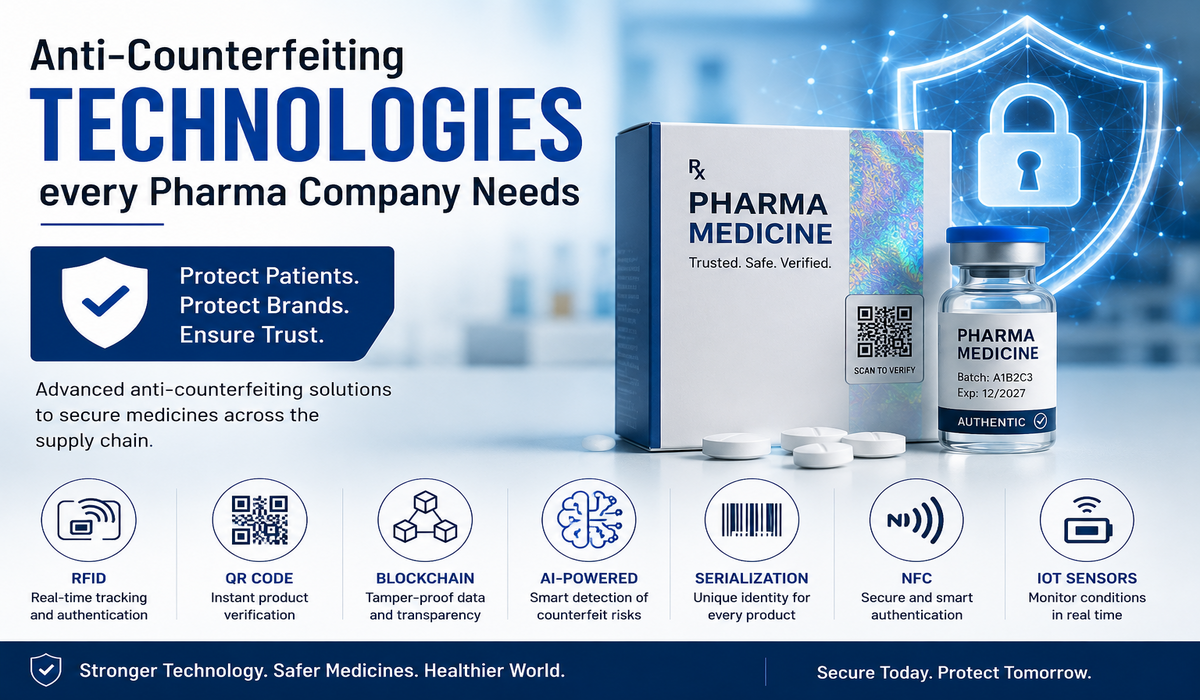
Radio Frequency Identification (RFID) has become one of the most effective technologies for pharmaceutical anti-counterfeiting. RFID tags store unique digital identities that allow every medicine package to be identified without direct line-of-sight scanning. Unlike traditional barcodes, RFID enables bulk reading, faster inventory management, and improved tracking throughout manufacturing, warehousing, and distribution.
Every tagged pharmaceutical product carries a unique electronic identifier that cannot be easily duplicated. As products move through different checkpoints, RFID readers automatically capture and verify product information against centralized databases. Any mismatch immediately alerts supply chain operators to potential counterfeit activities.
RFID also improves operational efficiency by reducing manual scanning, minimizing inventory errors, and enabling faster product recalls when necessary.
QR Codes with Digital Authentication Platforms
Dynamic QR codes have evolved into powerful product authentication tools. Modern QR-based verification systems generate unique, encrypted identifiers for each medicine package. Healthcare professionals, distributors, pharmacists, and consumers can instantly verify product authenticity using smartphones.
Unlike static QR codes that can be copied easily, dynamic authentication platforms validate each scan against secure cloud databases. Multiple scans from different geographic locations or unusual scanning patterns can indicate counterfeit activities, allowing manufacturers to investigate suspicious products immediately.
These digital authentication systems also create direct communication channels between pharmaceutical companies and end users, enabling patient education, product information sharing, adverse event reporting, and customer support.
Blockchain for End-to-End Supply Chain Transparency
Blockchain technology is transforming pharmaceutical supply chains by creating tamper-resistant digital records for every transaction. Every manufacturing event, shipment, warehouse transfer, and retail delivery is permanently recorded on a decentralized ledger, making unauthorized modifications virtually impossible.
Blockchain significantly improves transparency by allowing manufacturers, distributors, regulators, and healthcare providers to access verified product histories. If counterfeit products enter the supply chain, organizations can quickly identify where the breach occurred and isolate affected batches before they reach patients.
The integration of blockchain with serialization systems provides an additional layer of trust, especially for international pharmaceutical distribution networks involving multiple stakeholders.
AI-Powered Counterfeit Detection Systems
Artificial Intelligence has become an essential component of advanced pharmaceutical anti-counterfeiting strategies. AI systems continuously analyze supply chain data, scanning activities, purchasing patterns, distribution routes, and inventory movements to identify anomalies that may indicate counterfeit operations.
Machine learning algorithms improve detection accuracy over time by recognizing emerging fraud patterns. Instead of relying solely on manual inspections, AI provides predictive intelligence that helps organizations prevent counterfeit incidents before they affect the market.
Computer vision systems powered by AI also inspect pharmaceutical packaging, labels, holograms, and printing quality during manufacturing, identifying microscopic defects that human inspectors may overlook.
Serialization and Track-and-Trace Technologies
Serialization remains one of the foundational elements of pharmaceutical security. Every medicine package receives a globally unique serial number linked to production data, batch information, expiration dates, and manufacturing records.
Track-and-trace systems monitor each serialized product throughout the supply chain, ensuring complete visibility from manufacturing facilities to pharmacies and hospitals. If unauthorized products appear within the distribution network, organizations can quickly determine whether the serial numbers are valid or duplicated.
Modern serialization platforms integrate seamlessly with enterprise resource planning systems, warehouse management software, and regulatory reporting platforms, making compliance more efficient while strengthening anti-counterfeiting efforts.
Tamper-Evident Smart Packaging
Smart packaging technologies provide visible evidence of unauthorized product access while incorporating digital authentication capabilities. Modern pharmaceutical packaging combines tamper-evident seals with RFID tags, NFC chips, security inks, holographic elements, and serialized QR codes.
Consumers gain greater confidence knowing that product packaging clearly indicates whether medicines have been opened or altered before purchase. Pharmaceutical companies also benefit from stronger brand protection, improved patient safety, and enhanced regulatory compliance.
Smart packaging continues to evolve with embedded sensors capable of monitoring environmental conditions such as temperature, humidity, and shock exposure, ensuring product quality throughout transportation.
NFC Authentication for Premium Pharmaceutical Products
Near Field Communication (NFC) technology offers another highly secure authentication method. Embedded NFC chips allow users to verify medicine authenticity simply by tapping their smartphones against product packaging.
Unlike printed codes that can potentially be copied, NFC chips use encrypted communication protocols that are significantly more difficult to replicate. Manufacturers can also update authentication information remotely, monitor customer interactions, and collect valuable product engagement data.
NFC authentication is particularly valuable for high-value medicines, specialty pharmaceuticals, biologics, vaccines, and personalized therapies where counterfeit risks are especially high.
Internet of Things (IoT) for Secure Pharmaceutical Distribution
Internet of Things devices provide continuous monitoring throughout pharmaceutical logistics. Smart sensors installed within shipping containers and transport vehicles collect real-time information regarding product location, temperature, humidity, vibration, and security conditions.
This continuous visibility helps pharmaceutical companies ensure both product integrity and supply chain security. If shipments deviate from planned routes or environmental conditions exceed acceptable thresholds, automated alerts enable immediate corrective actions.
IoT-enabled monitoring also supports regulatory compliance by maintaining complete environmental records for sensitive pharmaceutical products.
Digital Twins and Predictive Supply Chain Security
Digital twin technology is emerging as an innovative solution for pharmaceutical supply chain management. By creating virtual replicas of manufacturing facilities, logistics operations, and distribution networks, organizations can simulate potential security vulnerabilities before they occur.
Predictive analytics integrated with digital twins allows pharmaceutical companies to optimize distribution routes, detect bottlenecks, evaluate security risks, and improve inventory management while minimizing opportunities for counterfeit infiltration.
As pharmaceutical supply chains become increasingly global, digital twins provide valuable operational intelligence that enhances both efficiency and product security.
Regulatory Compliance Driving Technology Adoption
Governments worldwide continue strengthening pharmaceutical regulations to improve product traceability and patient safety. Compliance requirements increasingly emphasize serialization, electronic records, product authentication, and end-to-end supply chain visibility.
Modern pharmaceutical anti counterfeiting solutions simplify regulatory compliance by automating data collection, maintaining comprehensive audit trails, and generating standardized reports for regulatory authorities. Rather than treating compliance as an administrative burden, pharmaceutical companies can leverage these technologies to improve operational efficiency and build stronger consumer trust.
Organizations that proactively invest in advanced anti-counterfeiting technologies are better positioned to meet evolving regulatory expectations while maintaining competitive advantages.
The Business Benefits of Advanced Pharmaceutical Anti Counterfeiting Solutions
Beyond preventing counterfeit medicines, advanced authentication technologies generate measurable business value. Improved inventory accuracy reduces operational costs, while real-time supply chain visibility enhances logistics planning and demand forecasting. Faster product recalls minimize financial losses and protect patient safety during quality incidents.
Digital authentication also strengthens brand reputation by demonstrating a company’s commitment to quality, transparency, and patient protection. Consumers, healthcare providers, and regulators increasingly prefer pharmaceutical manufacturers that invest in secure, technology-driven supply chains.
As digital transformation accelerates across healthcare, anti-counterfeiting technologies are becoming integral components of broader pharmaceutical innovation strategies.
Future Trends in Pharmaceutical Anti-Counterfeiting
The future of pharmaceutical security lies in intelligent ecosystems where AI, blockchain, IoT, RFID, cloud computing, and advanced analytics operate together seamlessly. Rather than relying on isolated technologies, pharmaceutical companies will deploy integrated platforms that provide continuous product verification throughout the entire product lifecycle.
Artificial intelligence will become increasingly predictive, blockchain networks will improve cross-border collaboration, and digital authentication will become more accessible to healthcare professionals and consumers. These innovations will create stronger barriers against counterfeit medicines while improving operational efficiency across global pharmaceutical supply chains.
Companies that embrace these technologies early will not only enhance patient safety but also strengthen regulatory compliance, operational resilience, and long-term business growth.
Conclusion
Counterfeit medicines remain one of the most significant threats facing the pharmaceutical industry, making advanced security technologies an essential investment rather than an optional enhancement. In 2026, successful pharmaceutical manufacturers will combine RFID, blockchain, AI, serialization, QR code authentication, NFC, IoT monitoring, smart packaging, and predictive analytics to create comprehensive security ecosystems.
Implementing modern pharmaceutical anti counterfeiting solutions helps organizations protect patients, preserve brand integrity, improve supply chain transparency, and comply with evolving global regulations. As counterfeiters continue adopting more sophisticated methods, pharmaceutical companies must remain equally innovative by investing in technologies that deliver end-to-end product authentication, intelligent monitoring, and real-time supply chain visibility. The organizations that prioritize these solutions today will be better equipped to build trust, ensure medicine authenticity, and compete successfully in the increasingly digital pharmaceutical landscape.
Frequently Asked Questions (FAQs)
Q1. What are pharmaceutical anti counterfeiting solutions?
Pharmaceutical anti counterfeiting solutions are technologies and processes designed to prevent fake medicines from entering the supply chain. These solutions include RFID, serialization, blockchain, QR code authentication, NFC, AI-powered monitoring, and track-and-trace systems that help verify product authenticity, improve supply chain transparency, and protect patient safety.
Q2. Why are pharmaceutical anti counterfeiting solutions important for pharmaceutical companies?
Pharmaceutical anti counterfeiting solutions help manufacturers protect their brand reputation, comply with regulatory requirements, and ensure patients receive genuine medicines. They also reduce financial losses caused by counterfeit products and improve visibility across the pharmaceutical supply chain.
Q3. Which technologies are most effective for preventing counterfeit medicines?
Some of the most effective technologies include RFID for product tracking, blockchain for secure supply chain records, serialization for unique product identification, AI for counterfeit detection, QR code authentication for consumer verification, NFC-enabled packaging, and IoT-based monitoring for real-time shipment tracking. Combining these technologies provides a comprehensive defense against counterfeit pharmaceuticals.
Q4. How does serialization help reduce pharmaceutical counterfeiting?
Serialization assigns a unique identification number to every pharmaceutical product, allowing manufacturers, distributors, and regulators to track each package throughout the supply chain. This makes it easier to identify duplicate, diverted, or counterfeit products before they reach healthcare providers or patients.
Q5. What should pharmaceutical companies consider when choosing anti-counterfeiting solutions?
Pharmaceutical companies should evaluate scalability, regulatory compliance, integration with existing manufacturing and ERP systems, real-time tracking capabilities, data security, authentication accuracy, and future technology support. Choosing integrated pharmaceutical anti counterfeiting solutions that combine multiple technologies provides stronger protection and long-term operational benefits.
