
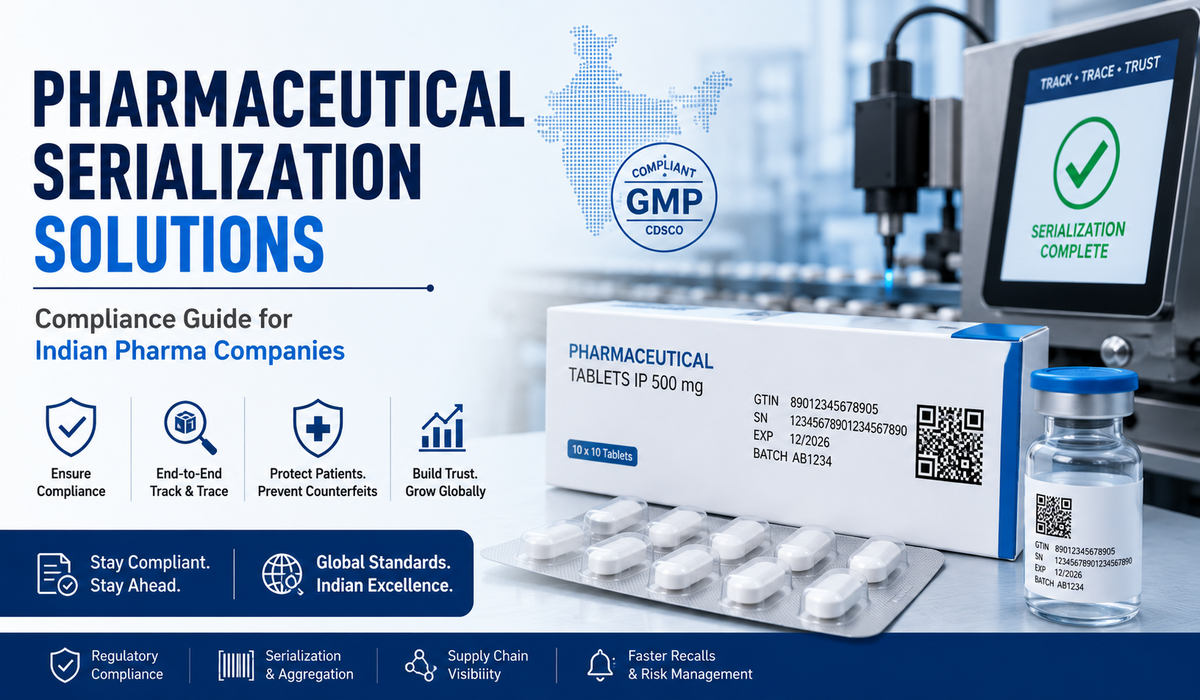
Pharmaceutical Serialization Solutions have become a critical requirement for the Indian pharmaceutical industry as global supply chains continue to evolve toward stricter regulatory compliance and traceability standards. Serialization is no longer just a technical upgrade but a compliance necessity that ensures every medicine pack can be tracked across the supply chain from manufacturing to the end consumer. For Indian pharma companies, which play a major role in global drug exports, adopting robust serialization systems is essential to meet international regulations, prevent counterfeiting, and maintain trust in global markets.
The growing complexity of pharmaceutical distribution networks has increased the need for accurate product identification at every level. Pharmaceutical Serialization Solutions help organizations achieve this by assigning unique identifiers to individual product units, enabling real-time tracking, verification, and reporting.
Understanding Pharmaceutical Serialization in the Indian Context
Pharmaceutical serialization refers to the process of assigning a unique serial number to each saleable unit of a drug product. This serial number is encoded in a machine-readable format such as a barcode or QR code and is stored in a centralized database for verification purposes. In India, serialization practices are closely aligned with global regulatory frameworks such as those enforced by the United States Food and Drug Administration and the European Medicines Agency.
Indian pharmaceutical companies, especially those involved in export, must comply with serialization requirements to ensure uninterrupted access to regulated international markets. The implementation of Pharmaceutical Serialization Solutions enables manufacturers to maintain compliance while also strengthening their internal supply chain visibility and operational efficiency.
Importance of Pharmaceutical Serialization Solutions for Compliance
Compliance is one of the most significant drivers behind the adoption of Pharmaceutical Serialization Solutions in India. Regulatory authorities across the world have implemented strict guidelines to eliminate counterfeit drugs and improve patient safety. Serialization ensures that every product can be authenticated at any point in the supply chain, reducing the risk of fraud and ensuring transparency.
For Indian pharma exporters, non-compliance can lead to shipment rejections, penalties, and loss of market access. Serialization systems help companies adhere to regulatory mandates by ensuring accurate data capture, aggregation, and reporting. This not only safeguards compliance but also enhances brand credibility in highly competitive international markets.
How Serialization Strengthens Supply Chain Security
The pharmaceutical supply chain is highly complex, involving multiple stakeholders including manufacturers, distributors, logistics providers, and pharmacies. Without proper tracking mechanisms, the risk of counterfeit products entering the supply chain increases significantly. Pharmaceutical Serialization Solutions address this challenge by creating a digital identity for each product unit.
This digital identity allows stakeholders to verify the authenticity of a product at every stage of movement. It also enables rapid recall processes in case of quality issues, thereby reducing potential risks to patient safety. The ability to trace products end-to-end enhances overall supply chain security and builds trust among healthcare providers and consumers.
Key Components of Pharmaceutical Serialization Solutions
A complete serialization system typically consists of several integrated components that work together to ensure end-to-end traceability. These include serialization software platforms, barcode printing and verification systems, data management systems, and regulatory reporting tools. Each component plays a critical role in ensuring that serialized data is accurately generated, captured, and transmitted across the supply chain.
The effectiveness of Pharmaceutical Serialization Solutions depends on seamless integration with existing manufacturing execution systems and enterprise resource planning platforms. This integration ensures that serialization processes do not disrupt production efficiency while still maintaining regulatory compliance.
Challenges Faced by Indian Pharma Companies
Despite the clear benefits, many Indian pharmaceutical companies face challenges in implementing serialization systems. One of the major challenges is the complexity of integrating new technology with legacy manufacturing systems. Additionally, the cost of implementation and the need for skilled technical resources can be barriers for small and mid-sized companies.
Another challenge lies in managing large volumes of serialized data across global markets with varying compliance requirements. Pharmaceutical Serialization Solutions must be flexible enough to adapt to different regulatory standards while maintaining consistency in data accuracy and reporting.
Best Practices for Successful Implementation
Successful implementation of Pharmaceutical Serialization Solutions requires a strategic approach that includes proper planning, stakeholder training, and technology alignment. Companies must begin with a clear understanding of regulatory requirements and operational workflows before selecting a serialization platform.
It is also essential to ensure that serialization is treated as a long-term investment rather than a one-time compliance task. Continuous monitoring, system upgrades, and staff training play a crucial role in maintaining system efficiency. Collaboration with experienced technology partners can significantly improve implementation outcomes and reduce operational risks.
Future of Pharmaceutical Serialization in India
The future of Pharmaceutical Serialization Solutions in India is closely tied to the growing adoption of digital transformation in the healthcare and pharmaceutical sectors. With increasing regulatory scrutiny and advancements in technologies such as blockchain and artificial intelligence, serialization systems are expected to become more intelligent and automated.
In the coming years, serialization will not only focus on compliance but also on predictive analytics, supply chain optimization, and real-time decision-making. Indian pharmaceutical companies that invest early in advanced serialization capabilities will be better positioned to compete in global markets.
Conclusion
Pharmaceutical Serialization Solutions are no longer optional for Indian pharma companies aiming to compete in regulated international markets. They are a fundamental requirement for ensuring compliance, improving supply chain transparency, and safeguarding patient safety. By adopting robust serialization systems, pharmaceutical manufacturers can strengthen their operational efficiency while meeting global regulatory expectations.
As the industry continues to evolve, serialization will remain a cornerstone of pharmaceutical compliance and digital transformation, making it an essential investment for long-term success.
Frequently Asked Questions (FAQs)
1. What are Pharmaceutical Serialization Solutions?
Pharmaceutical Serialization Solutions refer to technology systems that assign a unique serial number to each drug unit. This helps track and trace medicines throughout the supply chain, ensuring authenticity and preventing counterfeiting.
2. Why is pharmaceutical serialization important for Indian pharma companies?
Serialization is essential for compliance with global and domestic regulatory standards. For Indian pharma companies, it helps improve drug safety, build trust in international markets, and meet export requirements such as those from the US, EU, and other regulated regions.
3. What are the key components of a serialization system?
A complete serialization system typically includes software for data management, barcode or RFID labeling systems, packaging line integration, and a centralized database for tracking and reporting product movement across the supply chain.
4. How does serialization help in regulatory compliance?
Serialization ensures that every product unit is traceable, verifiable, and recorded in compliance databases. This allows pharma companies to meet regulatory reporting requirements and quickly respond to audits, recalls, or investigations.
5. What challenges do Indian pharma companies face in implementing serialization?
Common challenges include high implementation costs, integration with existing manufacturing systems, data management complexities, and training staff to adapt to new compliance technologies and workflows.
