
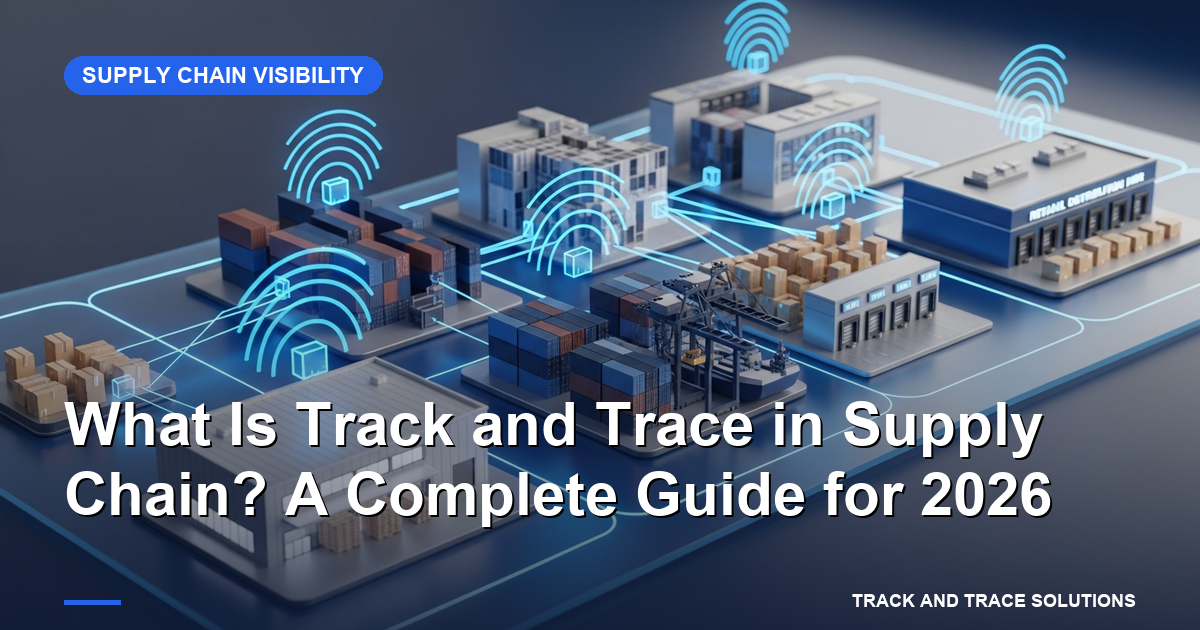
Supply chains in 2026 are far more complex than they were a decade ago. Businesses now operate across multiple geographies, depend on global suppliers, and manage customer expectations for faster deliveries and complete transparency. In such an environment, visibility into products and shipments has become essential rather than optional. Track and Trace in Supply Chain systems help organizations monitor product movement, identify origins, verify authenticity, and gain real-time insight into every stage of operations.
Companies in manufacturing, retail, healthcare, food processing, automotive, logistics, and pharmaceuticals increasingly rely on tracking technologies to improve operational efficiency and reduce risks. When businesses know exactly where products are located, how they move, and what conditions they experience during transit, they can make faster decisions and prevent costly disruptions.
Modern consumers also expect transparency. Customers want to know shipment status, sourcing details, sustainability practices, and estimated delivery times. Governments and regulatory bodies demand compliance, especially for industries dealing with medicines, food products, chemicals, and high-value goods. This growing requirement for visibility is driving the widespread adoption of advanced monitoring systems across supply networks.
Understanding how tracking and tracing work, their business value, implementation process, technologies involved, and future developments can help enterprises build resilient and intelligent supply chains.
What Is Track and Trace in Supply Chain?
Track and trace refers to the capability of monitoring products, assets, raw materials, and shipments throughout their lifecycle while maintaining historical records of movement and transactions. Although commonly combined, tracking and tracing perform two different but complementary functions.
Tracking focuses on present status. It enables organizations to identify where a shipment currently exists within the supply network. Businesses can determine whether goods are in transit, stored at a warehouse, delayed at customs, or delivered to customers.
Tracing works retrospectively. It provides historical information regarding a product’s journey, including origin, manufacturing process, handling stages, supplier involvement, and transportation history. Tracing allows organizations to investigate quality issues, identify contamination sources, or verify authenticity.
For example, a pharmaceutical company may need to identify where a medicine batch was produced and which distribution centers handled it before reaching hospitals. Similarly, a food manufacturer may trace contamination back to a specific supplier or production lot.
Together, these capabilities create complete supply chain visibility and improve accountability across operations.
Why Track and Trace in Supply Chain Matters for Modern Businesses
Global supply chains face numerous challenges including geopolitical disruptions, supplier uncertainty, inventory inaccuracies, counterfeiting, theft, compliance requirements, and changing consumer expectations. Limited visibility can significantly increase operational costs and reduce customer trust.
Organizations implementing advanced visibility systems gain the ability to respond proactively to disruptions rather than reacting after losses occur. Faster decision-making becomes possible because stakeholders receive accurate information regarding shipment locations and inventory status.
Another important factor is compliance. Industries such as pharmaceuticals and food manufacturing must maintain strict documentation regarding sourcing, handling, and distribution. Inadequate records can lead to legal penalties and reputational damage.
Transparency has also become a competitive advantage. Customers increasingly prefer businesses capable of providing detailed product information and shipment updates. Visibility supports stronger relationships between suppliers, distributors, and end customers.
The ability to identify inefficiencies quickly also improves productivity. Delays, bottlenecks, and wastage become easier to detect, helping organizations optimize logistics performance.
Core Components of an Effective Supply Chain Visibility System
Successful implementation depends on several interconnected components working together across the supply ecosystem.
Product Identification and Serialization
Every item moving through the network requires a unique identifier. Serialization allows businesses to assign distinct codes to products, batches, or assets. These identifiers enable precise monitoring throughout production, storage, transportation, and delivery.
Unique product identities reduce duplication issues and improve counterfeit prevention measures.
Data Capture Mechanisms
Data collection forms the foundation of monitoring systems. Information may be captured through barcode scanning, QR codes, RFID tags, IoT sensors, GPS devices, and mobile applications.
Continuous data collection improves accuracy and provides real-time operational insights.
Connectivity Infrastructure
Collected information must move securely across systems. Cloud platforms, wireless communication networks, APIs, and enterprise software integrations enable seamless data sharing between stakeholders.
Without proper connectivity, visibility remains fragmented.
Analytics and Reporting
Raw information provides little value without analysis. Advanced analytics help organizations detect delays, predict disruptions, evaluate supplier performance, and optimize logistics operations.
Predictive insights increasingly influence strategic supply chain decisions.
Compliance Documentation
Regulatory reporting requirements necessitate maintaining historical records. Documentation helps demonstrate adherence to industry standards and supports audit processes.
How Track and Trace Systems Work: Step-by-Step Process
Implementing visibility systems involves multiple stages rather than a single technology deployment.
Step 1: Assign Unique Identification
Products, pallets, containers, or shipments receive unique serial numbers or digital identifiers. Identification enables differentiation between similar goods.
Step 2: Capture Information at Every Touchpoint
Whenever products move between suppliers, warehouses, transportation providers, or customers, information is recorded. Events such as dispatch, arrival, inspection, and delivery become part of the digital history.
Step 3: Store and Integrate Data
Collected information is centralized through ERP platforms, cloud systems, or logistics software. Integration ensures stakeholders access updated records.
Step 4: Monitor Product Movement in Real Time
Businesses observe shipment status continuously using dashboards and monitoring platforms. Real-time alerts notify teams regarding delays or unusual conditions.
Step 5: Analyze Historical Data
Historical records help organizations investigate disruptions, improve planning accuracy, and optimize future operations.
Step 6: Generate Reports and Ensure Compliance
Reports support audits, regulatory requirements, quality assurance initiatives, and performance measurement.
Technologies Powering Track and Trace in Supply Chain in 2026
Technological innovation continues transforming visibility capabilities across industries.
Internet of Things (IoT)
IoT sensors monitor environmental conditions including temperature, humidity, vibration, and pressure during transportation. This is especially valuable for pharmaceuticals and perishable products.
Continuous monitoring reduces spoilage risks and improves quality assurance.
RFID Technology
Radio Frequency Identification enables automated data collection without direct scanning. RFID improves warehouse efficiency and inventory accuracy.
Large-scale logistics operations increasingly rely on RFID systems.
GPS Tracking
GPS technology provides location visibility for vehicles, shipments, and assets in transit. Organizations can estimate delivery times more accurately.
Artificial Intelligence
AI analyzes historical patterns to predict disruptions, demand fluctuations, and logistics inefficiencies. Intelligent recommendations improve decision-making.
Blockchain
Blockchain creates tamper-resistant records that enhance transparency and trust among supply chain participants.
Industries dealing with authenticity verification increasingly explore blockchain adoption.
Cloud Computing
Cloud platforms facilitate centralized visibility, remote access, and integration between multiple stakeholders.
Industry Applications and Real-World Use Cases
Visibility systems create value across diverse industries.
Pharmaceutical Industry
Counterfeit medicines remain a major global concern. Pharmaceutical manufacturers use serialization and monitoring technologies to verify authenticity and comply with regulations.
Traceability helps identify affected batches quickly during recalls.
Food and Beverage Sector
Food contamination incidents require immediate investigation. Companies can trace ingredients back to suppliers and remove affected products rapidly.
Faster response reduces health risks and protects brand reputation.
Manufacturing
Manufacturers monitor raw materials, work-in-progress inventory, and finished goods movement. Improved visibility enhances production planning.
Retail and E-commerce
Retail businesses provide customers with shipment updates while optimizing inventory replenishment strategies.
Transparency improves customer experience.
Automotive Industry
Automotive production depends on multiple suppliers worldwide. Monitoring component movement minimizes production delays.
Business Benefits of Implementing Visibility Systems
Organizations adopting modern tracking capabilities experience operational and strategic improvements.
Enhanced transparency improves collaboration among suppliers and logistics partners. Better visibility reduces uncertainty and strengthens planning accuracy.
Inventory optimization becomes easier because organizations maintain accurate stock information. Reduced overstocking and understocking improve working capital utilization.
Operational efficiency increases when bottlenecks become visible early. Companies can resolve delays before they escalate.
Customer satisfaction improves through timely updates and reliable delivery performance.
Regulatory compliance becomes more manageable due to comprehensive historical records.
Loss prevention also improves because theft, diversion, and counterfeit activity become easier to detect.
Common Challenges During Implementation
Despite advantages, implementation often involves obstacles.
Legacy infrastructure may limit integration with modern technologies. Older systems frequently require upgrades before supporting advanced visibility capabilities.
Data inconsistency presents another challenge. Inaccurate or incomplete information reduces reliability.
High initial investment costs can discourage adoption among smaller organizations.
Employee resistance sometimes slows implementation efforts. Training programs are necessary for successful transition.
Cybersecurity concerns also increase as connected systems expand.
Addressing these challenges requires long-term planning rather than isolated technology investments.
Best Practices for Successful Deployment
Organizations achieving strong results generally adopt phased implementation strategies.
Defining clear business objectives before deployment improves alignment between technology investments and operational goals.
Starting with pilot programs helps identify challenges early while minimizing risk.
Integrating systems across suppliers, logistics providers, and internal departments improves end-to-end visibility.
Regular employee training strengthens adoption rates.
Continuous monitoring and optimization ensure long-term effectiveness.
Leadership commitment remains essential throughout implementation processes.
Future Trends: How Supply Chain Visibility Is Evolving Beyond 2026
Supply chain ecosystems are becoming increasingly intelligent, autonomous, and predictive.
AI-driven predictive analytics will likely move beyond disruption forecasting toward autonomous decision-making. Systems may automatically reroute shipments or adjust inventory levels.
Digital twins are expected to gain wider adoption. Virtual supply chain models enable simulation and optimization before operational changes occur.
Blockchain adoption may expand as transparency requirements increase.
Sustainability monitoring will become more important. Organizations will track environmental impact alongside product movement.
Hyperautomation combining AI, robotics, and IoT could reshape logistics operations significantly.
Future visibility systems may focus less on monitoring and more on proactive optimization.
Choosing the Right Solution for Your Business
Selecting an appropriate platform depends on industry requirements, operational complexity, budget, and scalability needs.
Businesses should evaluate integration capabilities, analytics features, regulatory support, deployment flexibility, and vendor expertise before investing.
Solutions designed for current operations may become inadequate as organizations expand. Scalability should therefore remain a primary consideration.
Long-term success depends on selecting technologies aligned with business objectives rather than following market trends alone.
Where to go next
Track and trace in 2026 is not a single product you can buy — it’s a stack of identifiers, capture technologies, event stores, and integrations chosen to fit your industry, your trading partners, and the regulators you answer to. The good news is the standards are stable, the components are mature, and the ROI is well-documented.
If you’d like a working assessment of where your supply chain stands today and what the most cost-effective first step looks like for your situation, talk to our team. We’ve deployed traceability programs across pharmaceuticals, healthcare, food, manufacturing, and logistics in India, the United States, the United Kingdom, and South Africa.
People Also Ask (FAQs)
Q1. What is Track and Trace in Supply Chain?
Track and Trace in Supply Chain refers to monitoring products, assets, or shipments throughout their movement while maintaining historical records of every stage. Tracking provides real-time status information, whereas tracing helps identify origins, processing history, and previous movement. Together, these capabilities improve visibility, compliance, efficiency, and transparency across supply networks.
Q2. Why is supply chain visibility important?
Visibility enables organizations to monitor operations continuously, reduce disruptions, improve delivery performance, strengthen compliance, and optimize inventory management. Businesses with limited visibility often experience inefficiencies and delayed decision-making.
Q3. Which industries benefit most from tracking technologies?
Pharmaceuticals, manufacturing, food processing, retail, automotive, logistics, and healthcare sectors benefit extensively because these industries require transparency, regulatory compliance, and product authenticity verification.
Q4. How does IoT improve supply chain monitoring?
IoT devices capture real-time information related to location, temperature, humidity, and environmental conditions. Continuous monitoring helps reduce spoilage, improve quality control, and enhance operational awareness.
Q5. Can small businesses implement tracking solutions?
Yes. Cloud-based platforms and scalable technologies allow smaller organizations to adopt visibility systems without large infrastructure investments. Implementation can begin gradually based on business priorities.
Q6. What is the difference between tracking and tracing?
Tracking focuses on current location and shipment status, while tracing examines historical movement and product origin. Both functions complement one another to create complete transparency.
